
 Charlotte Peach
 In Rachel Sennott’s new HBO show, I Love LA, Charlie – one of the four leads – says, ‘ Ugh, I hate inside jokes. It’s just like… why not me? Involved?’ and this is exactly how this show feels: like an inside joke. As a 19 year old, who lives with her best friends and spends a shameful amount of time on social media, I utterly relished I Love LA, but I know that, were I to give this show to my parents, or even my older, less online sister, they just wouldn’t quite get it.
I Love LA is, essentially, the new iteration of Sex and The City: a show centring on a core-four friend group, each with their own interconnected plotlines, trying to survive life in a big city. In the 2010s, Lena Dunham gave us Girls, an updated Sex and The City, with more flawed characters, more atrocious outfits, and significantly more cringe moments (but cringe in an enjoyable way). Now, in a heaven-sent gift, Sennott has revived the tradition and given us the 2020s version with I Love LA.
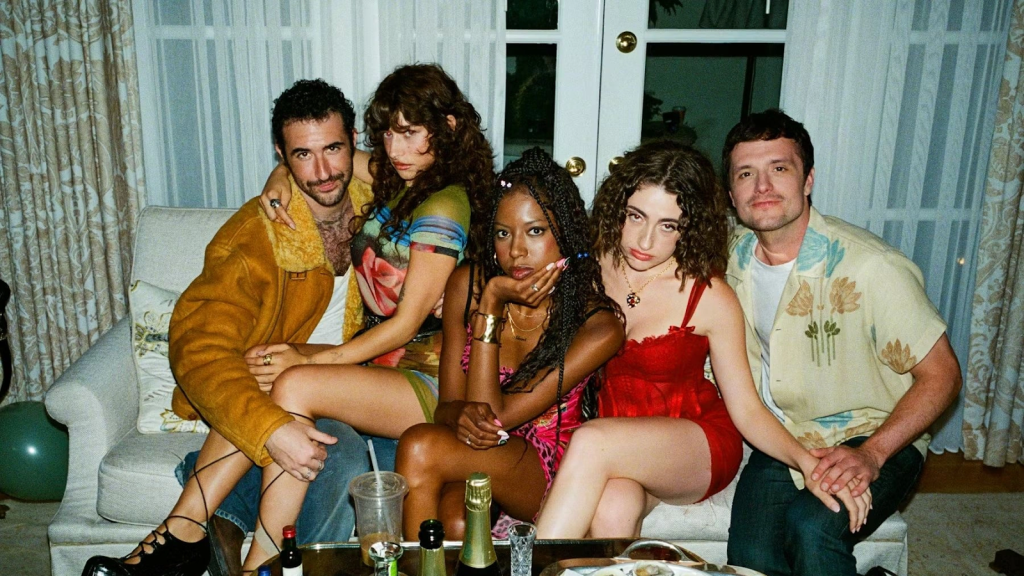
I Love LA follows LA residents Maia, Charlie and Alani as their old friend, now New York-based influencer Tallulah, comes back into town and affects their glossy LA lives. At the season’s beginning, the four characters all seem vain and mindless but after 8 brilliant episodes, it is undeniable that Sennott has given us four magnetic, subtle characters – you just have to look beyond the vocal fry to uncover it. There is Sennott’s Maia, a girlish yet overtly sexual creature, with exponentially growing ambition in her PR career; there is Jordan Firstman’s Charlie, a gay Samantha with deliciously comedic line deliveries (like when he tells a cafe line, “just so you know, the guy making your matchas inside did have three fingers up my ass very recently”) and the most strangely wholesome character arc; then there is True Whitaker’s Alani, a loveable, earnest nepo baby with an uncanny amount in common with Whitaker herself (whose father is an Oscar-winning actor and director); and finally, there is the tornado that is Tallulah, played by Odessa A’zion, a chaotic, enchanting ‘it-girl’ with the curls of a Greek sculpture and the cluelessness of Cher Horowitz. Just like its predecessors, which have people making declarations of “I’m a Charlotte” or “I’m a Marnie” decades on, young people will be claiming themselves Alanis or Charlies in years to come, I predict, especially with a season 2 confirmed by HBO. (There is also Josh Hutcherson’s endearing Dylan, the only normie of the characters, though he exists outside of the friend group as Maia’s boyfriend and I sadly doubt anyone will say, “I’m a Dylan”.)
A big element that distinguishes the show from Girls is the show’s perfect aesthetics: the costumes and the set are superb. Every single outfit is flawless but also purposeful. As Sennott explained on the Girls Rewatch podcast, the show wanted to dress the characters in ‘a way where they feel like they could all be friends, but they also all have their own sense of style’, and this intention is especially emphasised when Maia’s carefully curated style slowly morphs into Tallulah’s outgoing style later in the season. No matter the scene, the outfits are always phenomenal; as the costume designer, Christina Flannery, describes, it is ‘stylish without alienating viewers and authentic without trying too hard’. To say the outfits are timeless would be accurate – the characters wear a lot of vintage, with many 90s allusions to early-Carrie Bradshaw style, Reece Witherspoon in Cruel Intentions for Maia, and riot grrrl icons for Tallulah – but at the same time, the costumes also fresh and represent this moment in time. There are no microtrends, unlike the cursed lizard shirt of Girls, but it’s still very in-touch and up-to-date.
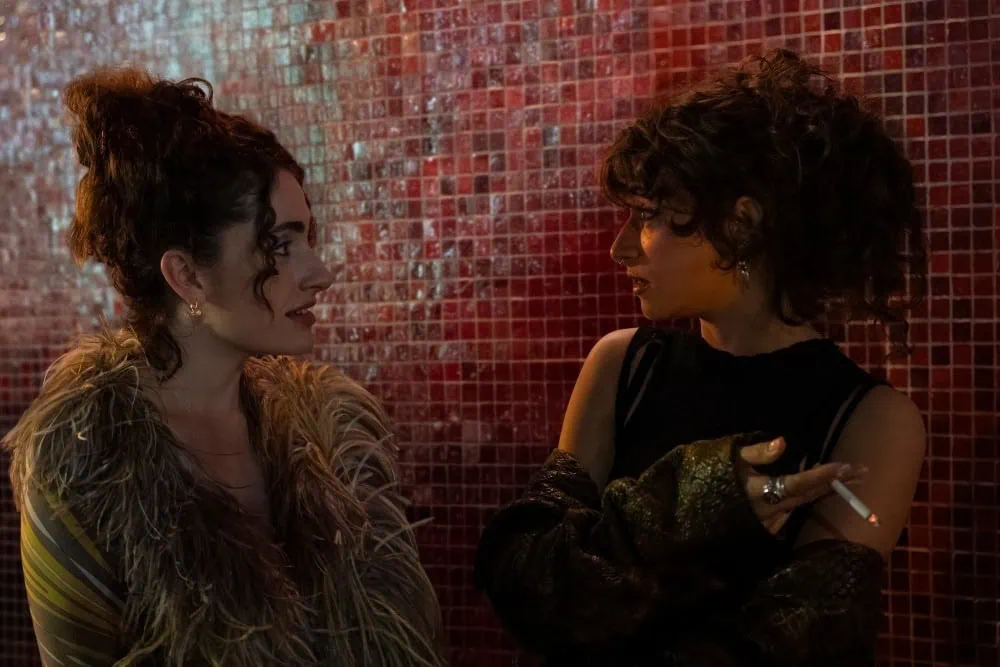
Similarly, the attitude of the show is very in-touch: unlike Lena Dunham’s latest disappointing attempt with Too Much, I Love LA is perfect for Gen Z because it deeply understands the Gen Z audience. It understands that they are ridiculous and slightly too politically correct, but also that they are funny and very intelligent people. It doesn’t overexplain the internet or TikTok – in fact, there is barely any representation of social media, despite Tallulah being a content creator (of what content, we don’t even know) – but it just understands that the internet is a seamless part of the characters’ lives, as it is ours.
Moreover, the show understands what social media and the pandemic has done to young people, which it laughs at but also gives genuine consideration to. It understands the feelings of isolation that most young people have, even if they’re surrounded by friends, and it understands the feeling of presenting a glowing, synthetic image to the world, when everything is actually horrible. In fact, that is essentially the thesis of the show: LA is the land of artificiality and all four friends are searching for sincere happiness and success.
Does the show actually love LA? I wouldn’t say so, and this makes me like the show all the more. The cinematography certainly loves LA – the constant sunshine and palm trees are a bit too indulgent sometimes – and the script loves mentioning LA touchstones, like Courage Bagels, Erewhon and the Scientology Church (the references were taxing for me; grounding but akin to a Richard Curtis film referencing Madame Tussauds and Leicester Square – unflattering and cringeworthy). Overall, however, LA isn’t really even liked for most of the season, and at most, the characters have a love-hate relationship with the city – Dylan blames it for Maia’s vanity and the group even flee to New York at one point, but inevitably and quickly return. LA isn’t quite a character in the show, like New York City was a character in Sex and the City and Broad City, or even like LA was an integral part of La La Land, or at least not yet. I have a feeling Sennott plans to develop this ‘character of LA’ in further seasons, but we’ll just have to wait and see.