 Ben Mistry
 Timothée Chalamet has been at the forefront of the film industry for close to a decade, but his recent comments about ballet and opera have put him in the firing line. Chalamet stated, “I don’t wanna be working in ballet or opera, or you know, things that are like ‘Hey keep this thing alive even though no one cares about this anymore – all respect to the ballet and opera people out there.” Ever since his breakout role in Luca Guadagnino’s 2017 film Call Me by Your Name, Chalamet has continued to produce stellar performances; however, some find that his meteoric rise has facilitated a growing arrogance. Now with these flagrant comments, it placed him in the wrong books of many artists across disciplines and reportedly damaged his chances at securing his first Oscar win for his performance as Marty Mauser in Marty Supreme (2025) – but was this really the case?
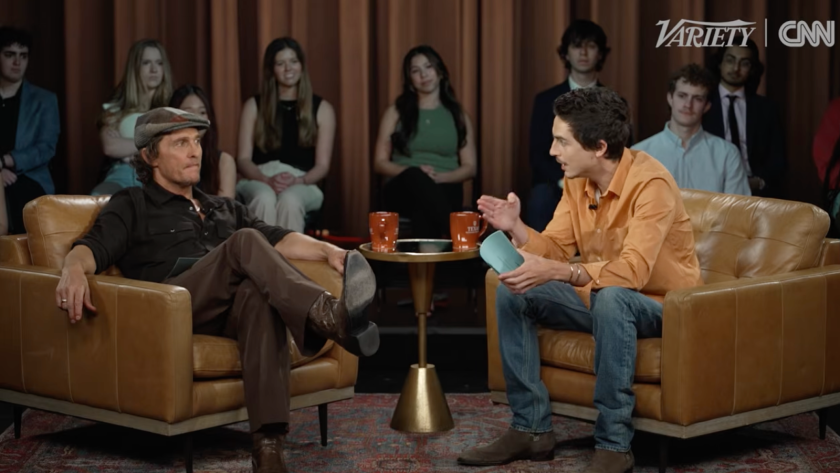
An argument in defence of Chalamet is that the quote was clipped from an hour-long conversation and placed in isolation; so, let me place it in its context. The comment was made during a Variety and CNN ‘Town Hall’ video with Matthew McConaughey, in which the two actors spoke about their film in front of an audience. After discussing their meeting on the set of Interstellar (2014), the conversation moved onto contemporary audiences’ lack of attention span and the fear of cinema dying as an artform. During and since the COVID pandemic and lockdowns, cinema-going dramatically decreased in favour of streaming new films at home following a shorter theatrical release. Considering this, the two actors looked at how the structure of films are accommodating audiences’ shorter attention spans, and Chalamet notes that he doesn’t want to participate in an art form that people are losing interest in. His comments do not seem to attack the value of what ballet and opera contribute to art, but rather their relevance to wider audiences, raising questions about his own position within the film industry. It places him at an important juncture in which he needs to establish whether he is here for the artform and industry itself, or if he is only here to become, and stay, relevant within the industry.
Chalamet’s character has been of a divisive nature ever since his acceptance speech at the 2025 SAG Awards which he won for his portrayal of musician Bob Dylan in A Complete Unknown (2024). In this speech, Chalamet announced that he wants to be known as one of the greats, invoking industry stars including Viola Davis, Marlon Brando, and Daniel Day-Lewis, as well as American sporting icons such as Michael Jordan and Michael Phelps. Stating that his win did not secure him placement amongst these figures, Chalamet recognised the win as ‘extra fuel’ to help him on his way. To some this read as his desire, ambition, and dedication to his craft (also a precursor to Marty Supreme), but others read this as a specific kind of arrogance that signified a premature expectation and assessment of his ability. Whichever side you agree with, it signifies that Chalamet is not new to this kind of attention.
Focusing on the ballet section of his comment, it’s hard to believe that these comments would have been made flippantly, considering his grandmother, mother, and sister have all performed in the New York City Ballet. A Vanity Fair reporter writes that this gives Chalamet a right to make these comments as he is “intimately familiar” with the discipline. However, if anything, this makes the comments even more bewildering as he should have an understanding and appreciation for the work that goes into it. The comment, whilst being incredibly naïve and careless, focused on his own fear of being part of something less relevant to a larger audience. Statistically, cinema is a more popular artform. Reported by the Pew Research Centre, 53% of American adults said that they had seen a film in a cinema, whereas only 0.7% said they had attended a live opera event. The inclusion of this is not to prove a point over the popularity of either art form, but rather to elucidate how, if Chalamet wants to maintain a global image, film is the medium he must focus on. This heavily relates back to his SAG Award speech, clearly highlighting this fear of being forgotten or undervalued – something that he has definitely not experienced in the last ten years of recognition. Even beyond this, the very nature of film is preservative; Chalamet’s films will not be forgotten nor lost so why does he feel the need to be remembered so intensely?
One of the lingering questions is whether these comments influenced his failure to win Best Leading Actor at the Oscars. The BBC reported that his chances of winning had dropped to 34% from 80% at the beginning of the award season, versus Michael B. Jordan’s 50% for his portrayal of twin brothers Elijah “Smoke” Moore and Elias “Stack” Moore in Ryan Coogler’s Sinners (2025). However, the BBC report exclaims that Chalamet had already been losing momentum in the race, and that these comments didn’t make a difference; after all the Oscars’ ballot for academy members closed Thursday 5th March with Chalamet’s comments only stirring controversy after this deadline. Whether this influenced the vote or not, it is likely that the academy members shared the same sentiment as other celebrities and artists. As was seen during the ceremony, Chalamet wasn’t exactly revered by the industry as he found himself at the brunt of a lot of jokes directly aimed at his comments. He absolutely did not get off lightly. With Marty Supreme’s losses at this year’s ceremony, Chalamet has already turned his attention to the highly anticipated third Dune film – it already seems that the internet has moved on to his next project, leaving the opera and ballet ‘controversy’ behind. Whether you support or oppose Chalamet’s comments, it is clear from the outcry that the talking down of any artform is not something that people take lightly. Artists should uplift other artists, and art should uplift art.