 Leimi Zhou
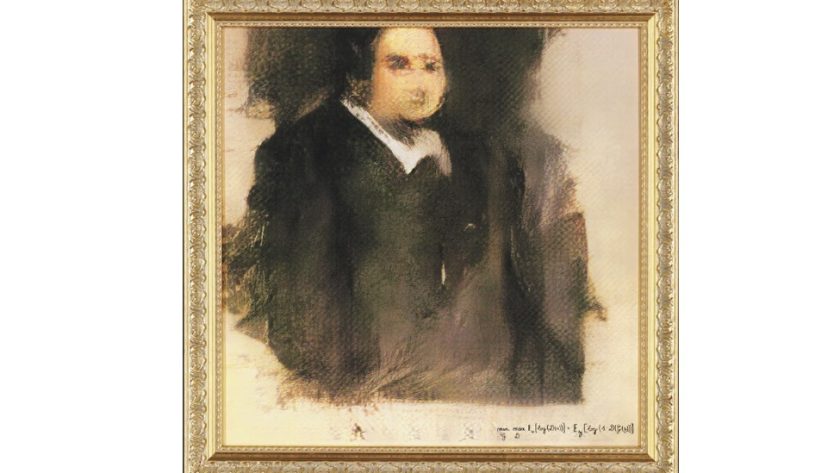
 Portrait of Edmond de Belamy (2018) by Obvious, an early work of AI generated art
“Don’t criticise what you can’t understand.” – Bob Dylan (1964)
Artists of our generation grew up being told that robots would one day replace drivers, dishwashers and accountants. But 20 years later, we’ve grown up, and it feels like art is being suffocated to death in an increasingly cold and alien world run by billionaire tech overlords.
Since the rise of generative AI in recent years, artists everywhere have been sounding the big red alarm. We’re protesting, we’re boycotting, we’re scrambling for shelter and there’s a genuine sense that we’re powerless to stop something sacred from being destroyed.
So, I decided to spend the past few months researching this topic. I’ve immersed myself in the world of AI art, worked at an AI entertainment software company, interviewed audiences, young artists and professional AI artists as well as enrolling in a creative AI and machine learning module offered by UCL in an effort to understand what’s really going on.
My first realisation was that there’s actually a huge lack of understanding among artists about AI tools, especially those most vocally opposed to it. Many of those kicking and screaming to ban AI probably couldn’t distinguish Midjourney from Higgsfield, probably haven’t seen works of AI generated art beyond dancing cats or ‘Kirkification’ memes, and probably have little experience or insight into what integrating AI into an artistic workflow actually entails. Instead, they parrot the rhetoric of other AI critics without questioning it and let confirmation bias drive their research process, ironically trapping themselves in the same echo chamber they accuse AI fanatics of inhabiting.
Beyond that, I’ve found that artists don’t just dislike AI on purely logical grounds. Instead, their reaction is deeply visceral, as if they’re personally offended or almost disgusted by it, which is completely understandable. However, I urge anyone who feels that way to suspend this reaction for a brief moment to recognise that we are, fundamentally, “on the same team” as human beings who want art to continue thriving.
I say this because I’ve come out the other end believing what seems to be the unpopular opinion: that there has never been a better time to be an artist precisely because of the possibilities that AI opens up. So, this is me making the case for AI in art, explaining why I think you should be excited, and why change is so often wrongfully demonised.
Recently, I scrolled past an Instagram post, which equated using AI in art to photographing a mountaintop view with a drone instead of hiking it, asking: What’s the point? Why take a shortcut, or “cheat” the process by typing a prompt into an AI and destroying your artistic integrity in the process?
However, this view of AI fundamentally misunderstands the relationship between artistic value, effort and technology. Indeed, it is clear that artistic value is not solely determined by the pixels or airwaves that a work of art consists of, but by a variety of factors including the effort, intention and context behind it. Otherwise, why would an original piece be more valuable than an exact replica? Meanwhile, a primary function of technological innovation is to make things easier, more efficient and therefore more effortless. But the result of this has almost never been to reach goals of the past easily, but instead to redirect our effort into new ones, otherwise people would only be flying in airplanes to their local grocery stores instead of across the globe.
So, what happens when technological innovation renders accomplishing our artistic goals of the past effortless? History has shown that our tastes evolve, our standards adapt, and art as a whole progresses. When photography was first introduced, artists squirmed in fear, with critics such as Baudelaire condemning it as the “mortal enemy of art.” These critics believed it would make the then standard of realism that painters worked so hard to reach effortless, and thus worthless. Sound familiar? Yet two centuries later, nobody in their right mind would critique a photograph on the merit of its realism. Furthermore, rather than destroy the value of painting, photography instead directly ushered in the most creatively diverse era in the medium’s history as impressionist, expressionist, abstract, and underground voices emerged into a creative spotlight.
Therefore, it is worth asking: What current challenges will AI tools render effortless, and how will artistic value evolve as a result? Perhaps the high production value of expensive studio-funded projects will no longer be the standard once it ceases to be a barrier of entry. Or perhaps photorealistic CGI loses its “wow” factor once it becomes accessible to anyone through AI. Consider the factors such as a creator’s individual human perspective, or their taste, or curation, or vision, or worldbuilding: all things that an algorithm trained to output its most statistically probable average can, by design, never achieve. Perhaps those things will finally sit at the forefront of how we as the audience judge art.
However, this doesn’t mean the traditional crafts we grew up loving will disappear. Instead, they simply become a creative choice. Otherwise, why do millions still flock to cinemas to watch an aging Tom Cruise dangle off a plane when the CGI and green-screen technology capable of replacing such practical stunts for cheaper has existed for decades? Because the allure of art is deeply entrenched in its creative process. To say that a tool that is merely able to replicate a result can replace its charm entirely is a fundamental misunderstanding of what draws audiences to a work of art. Art forms like hand-drawn animation, practical stunts and stop-motion puppetry are cherished by audiences precisely because of the immense care and labour needed to produce them. That demand isn’t going anywhere. Just because you can now generate animations without painstakingly drawing them frame by frame doesn’t mean you’re completely replacing the market for artists that do. So, if AI isn’t capable of replacing artists with an alluring creative vision or captivating craftsmanship, which artists will it replace?
If you view AI as nothing but a rival here to destroy the mediums you love, look away when AI technology is being used to recover lost artwork from painters such as Van Gogh who painted over their own canvas because they couldn’t afford new ones. Such work is being done by Oxia Palus, founded by my professor Dr. Bourached. Look away when damaged rolls of film a century old are upscaled to pristine 4K quality, and definitely turn your back on the AI tools that will allow large files or processing complex motion graphics to be rendered in minutes instead of hours. Despite the constant fearmongering within the art community, so far we’ve seen AI help traditional mediums of art in far more ways than hurt it.
That being said, many object to the very premise that creating works of AI generated art requires any effort or skill at all. To those I say: “Try it. It may surprise you.” While the current generative AIs can produce polished visuals, smooth video transitions, 3D models or complex visual effects with ease, AI artists struggle greatly with challenges traditional mediums don’t face at all, like object permanence, consistent visuals, coherent physics or realistic textures. The belief that using AI in art is just “typing a prompt and pressing enter” is the equivalent of believing DJs just “make a Spotify playlist and press play.” It’s ignoran and dismissive of the effort required to navigate the constraints and affordances of a new or evolving medium.
Indeed, each medium has its constraints and affordances, which build unique strengths that elude other mediums. As Henri-Cartier Bresson noted, no medium captures a decisive moment quite like photography. Meanwhile, Tarkovsky highlighted film’s unique advantage in portraying, distorting and manipulating time. Regarding this topic, one of my favourite quotes is from musician Brian Eno’s “ugliness theory,” where he argues that “whatever you find weird, ugly or uncomfortable and nasty about a medium will surely become its signature.”
The surreal, uncanny qualities of gen-AI visuals that result directly from its technical limitations are a language waiting to be spoken. I implore you to delve into the work of artists such as Catsoup, Xeocho, Edward Skeletrix or Fullwarp to witness artists who don’t use traditional mediums as the benchmark for their work and the mix of dreamy and nightmarish visuals that sit at the forefront of this new medium as a result. Remember that the original Will Smith eating spaghetti video was only two years ago. Imagine where artists will take this medium a decade from now.
Of course, the debate lies in whether these “original” works are truly original. After all, they’re trained from data sets of other people’s work. Possibly your work. Is it ethical for a picture you’ve taken, or a video you’ve filmed, or a work of art that you’ve laboured over to be fed into an algorithm without your consent? The concerns regarding ownership are inseparable from conversations about its artistic potential, and these are concerns that I, for the most part, share. However, the answer to the baggage that innovative, disruptive technologies such as AI brings has never been to halt progress and devolve, but to navigate around the pitfalls while pushing forwards.
First and foremost, I believe that the owner of the artwork deserves full autonomy over how it is used. If an artist or label or studio does not wish their work to end up feeding an AI model, that decision should absolutely be respected. Indeed, these options do exist and will only rise in prevalence as demand for them increases. Platforms such as Vimeo, Bandcamp and Deviantart have already stepped forward with explicit policies against AI training on user content without consent. Moreover, tools like Glaze or Nightshade allow artists to protect their work by invisibly corrupting an image to either prevent AIs from learning accurately or even poisoning the dataset and degrading the model’s performance. It’s still early, but the infrastructure for artists to exist freely in an AI-integrated art industry is being built rapidly right under our noses.
The difficulty with ownership lies in how generative AI doesn’t copy and paste. In fact, if you ever try to get an AI to reproduce an image repeatedly, you’d soon realise it’s notoriously bad at doing just that. Instead, AI models recognise patterns and use them to predict the next pixel, then the next after that, and repeat until their task is complete. Therefore, it is often impossible to pinpoint the exact source of an AI generated element. For instance, note the tendency for AI to generate warmer hues which results in large part from all the golden hour photos being posted online. Which exact photo is it stealing from? Which photographer should then be credited? Those are impossible questions without answers.
What further complicates this conversation is that research consistently suggests that human creativity is formed through similar pathways. Nothing we create can be truly original either as everything we make draws on information we’ve already absorbed. If I were to ask you, for instance, where your sudden craving for a burger came from, would you be able to tell me which memory of which burger incited that thought and which chef should then be credited?
Moreover, the act of remixing, reinterpreting, and recontextualising other works has always been an inseparable part of the artistic process. Consider everything ranging from the very medium of collage or sampling in music production to a subtle homage or even just learning from the artists who came before you. Your original human voice does not get silenced when cooking with old ingredients so to speak as it’s the very thing that guides how they come together. If it does, that says more about the artist than anything. History has not been kind to those who blame a medium, genre, or tool for limiting their creativity, because truly creative artists have repeatedly triumphed above them. Why would AI be the exception?
I trust artists to do what’s best for art. But the corporations building these tools? Not so much. Art is more than entertainment: For as long as it’s existed, it’s been our most powerful voice of expression, which is precisely why censorship is always the first weapon those in power reach for. So, is AI the next step in centralising power and silencing artists once they become reliant on it? Perhaps.
But let’s not act like this is a new problem. A century ago, almost every creative decision in filmmaking was controlled by studio figureheads at Warner Brothers or Metro Goldwyn Mayer, lending them the power to strangle free expression through disgusting authoritarian measures like enforcing the Hays Code. Every technological advancement since then has chipped away at that power to give underrepresented voices a platform. Handheld cameras, digital editing software, and social media have allowed a medium once reserved for rich men in suits to reach almost anyone on the planet. Did this appoint new tyrants, like YouTube or Netflix? Yes, of course, and as long as money is in this game we call art, that will likely never change. But the net result is that film, much like almost every medium, has never been more democratised than it is right now as a direct result of technological innovation, which is why I do not reject the next wave of it.
One predominant argument I have not addressed is the environmental cost of AI usage. Honestly, I’m not informed enough to do it justice and provide you an informed opinion. I’ll only say that I’m curious about how it compares to traditional means of production which aren’t necessarily eco-friendly either. I’m also eager to see how engineering will further optimise AI processing to minimise its environmental impact as it scales larger and larger in the future, which I would be very surprised by if it doesn’t. But that’s a conversation for someone much more qualified than me.
With that being said, I say to the companies behind AI technology: Set your sights on the long term because this is not a micro-trend, it is here to change art forever. It is in your best interest to execute responsibly with respect to the artists who will end up becoming your customer base.
To the audiences, I say: Sit back and enjoy. In the coming decades, prepare to witness mind-blowing, boundary-pushing, and transgressive works of art you never imagined possible from voices you never knew you’d hear from.
Finally, to the artists, and to myself: Feel the fear that sits in your stomach right now. It sucks, but it is only human to fear change. Know that this is the same fear many have felt before, and countless more will feel in the future. But, also know that the only way to guarantee you lose is to believe it will magically go away if you close your eyes or kick or shout or scream. Push forwards instead and wield this new tool that has just been put in your hands with confidence, the same way every great artist has done before you.