 Kseniia Shuster
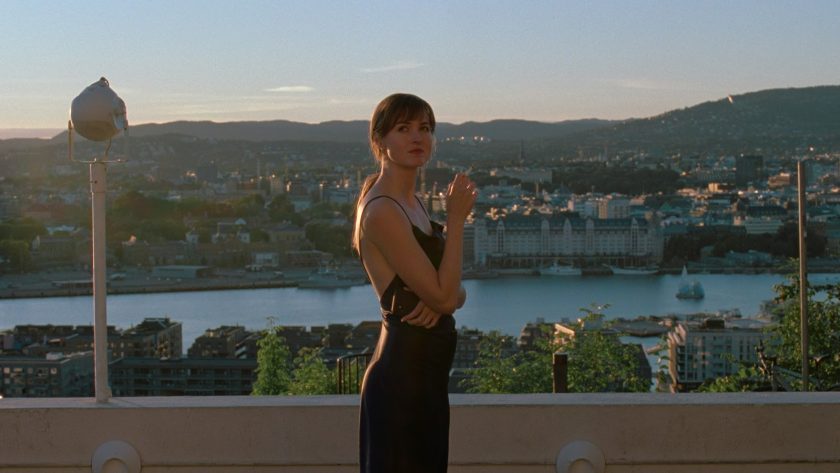
 Joachim Trier’s The Worst Person in the World (2021) has been quite well-received: it has a rating of 96% on Rotten Tomatoes and 4.1 on Letterboxd. The film is celebrated for its drastic sincerity and a realistic view on life and relationships. Let us take an honest look at the movie about honesty.
The film is unique in its emotional impact. Julie’s character is far from perfect. She makes mistakes, sabotages her relationship, fails to communicate with her family, many of her actions can be deemed as irresponsible, selfish, and even cruel to those around her. Yet Trier does not impose any evaluation of her behaviour. The film creates space for her to exist free of judgement. This is quite comforting: after all, aren’t we all sometimes confused, and don’t we all sometimes make wrong decisions? Julie is not “good”, but no-one is. We are stripped bare of our defences, and our weaknesses and imperfections are exposed on the screen. This is quite disarming, and may even be uncomfortable, but the film handles this delicate subject in a peaceful and tender manner. It refuses to criticize Julie’s behaviour; it simply tells her story in a tranquil fashion. This marks the film’s radical acceptance. The movie says, ‘It’s okay to be the worst person in the world’, and this is precisely what many of us need to hear.
However, Trier’s magic starts to fade when one takes a critical look at the film. The emotional appeal of the movie is based on the relatability of the protagonist: for the audience to feel exposed and reassured, Julie should be real. This is something the film, arguably, fails to accomplish. Julie’s character does not display much individuality, if any. In the rare moments when she is supposed to express her personal thoughts, she simply becomes a mouthpiece for outdated clichés from cultural and feminist discourse, such as ‘If men had periods, we’d hear about them all the time’ – an opinion which, in the film, is supposed to characterize her as thoughtful and intelligent. Another example of an unsuccessful attempt to give Julie an identity is her article, of which the audience knows only the title and one sentence, ‘Oral Sex in the Age of #MeToo. Can you be a feminist and still enjoy being mouth-fucked?’ Attempting to be bold and provocative, the title actually comes off as a reductive paraphrase of common feminist discourse. Besides the lack of novelty or depth in the question itself, the viewer never gets to know what Julie’s answer is. We only know the title – Julie’s thoughts have no place in Trier’s script.
In fact, most meaningful and interesting thoughts in the film do not come from Julie at all. They come from Aksel. The scene where he defends his comics on a TV programme takes up 4 minutes of screentime. Later, when Aksel is diagnosed with cancer, he talks in length about his experience of coming to terms with death for roughly 15 minutes combined. We even get to see his childhood house, which became the inspiration for his comics. These moments reveal intimate and touching aspects of his character – something that Julie, unfortunately, lacks. In contrast to Aksel’s reflections, Julie’s grief and experience of loss are crumpled in a simple time skip. Julie’s thoughts are once again excluded from the script. In this way, another opportunity to give her a personality and make her feel real is swiped under the rug.
Despite the film’s claim to sincerity and realism, not much is real about Julie’s character. In two hours, she never manages to be something more than an abstract idea of ‘a woman in her late 20s’. The film seems to confuse relatability with plainness and disregard for good character writing. Admittedly, it may not matter whether Julie is a well-written character if the film is successful in accomplishing its goal – which it is, considering its high ratings and good reviews. However, The Worst Person in the World may be revealing more than it intended to. In exposing the truth about human relationships, it also exposes the truth about female characters in contemporary cinema.