

 Christos Toilos
 Humble Beginnings
Yorgos Lanthimos is the most famous Greek director today (probably of all time), and one of the most famous in the world in general, who, especially in recent years, has achieved enormous global success, captivating critics and audiences and winning countless awards. But how did we get here?
In this article, we study Lanthimos’s filmography from the beginning of his career to the biggest festivals and the Oscars. We examine his influence on Greek cinema and I offer my personal opinions on his latest film, Bugonia.
Many film fans know Lanthimos’ name and have seen at least one of his films, with Poor Things perhaps being the most famous among them. But few have seen his early works and even fewer know about Lanthimos’ career before he began directing feature films.
In the 1990s, Yorgos Lanthimos directed many video clips for many of the most famous Greek singers and songwriters of the era, which are worth mentioning as the experienced viewer, having watched his later work, can recognize and identify the directorial habits and characteristic touches observed in his films within the music video clips he directed. Typical examples are the blindfolds, the awkward dances, and the use of wide-angle lenses.

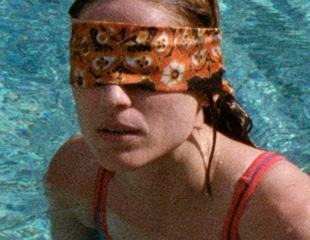
From the music video clip “Thelis i den thelis”
The most important example of the above phenomenon is the video clip of the song by Sakis Rouvas (who is internationally known for representing Greece in two Eurovision contests, winning the 3rd (2004) and 7th (2009) places) Den exei sidera I kardia sou (1998). In this video clip, there are clear thematic and visual similarities to Yorgos Lanthimos’ film Poor Things (2023). In this particular video clip, the story of a “mad scientist” unfolds who, together with his assistant, conducts experiments and tests on a human being in his laboratory, where he keeps him imprisoned. As the song and the video clip progress, we see the protagonist-experiment trying to escape, metaphorically and literally, while at the same time receiving an awkward erotic siege from the scientist’s assistant. The artistic choices of the laboratory, which are reminiscent of a post-industrial steampunk Frankenstein’s laboratory, the theme of the fetishization and examination of the human body, the direction of human movement that gives the artificial and robotic feeling, as well as the director’s scenographic choices such as the combination and alternation of color and black and white images, which strongly recall elements observed in “Poor Things”.


Beyond the video clips, Lanthimos had directed many viral commercials for Greek television with lines that made history such as “put the kot down slowly” or “pull over the gaidar” (Greek puns that I won’t bother explaining). Of course, the commercials were viral in their time and remained immortal on Greek cult television, but the connection with Lanthimos’ name occurred when he himself found international recognition and fans began to search for the first steps of his career. A fact that shows that nothing happens by chance.

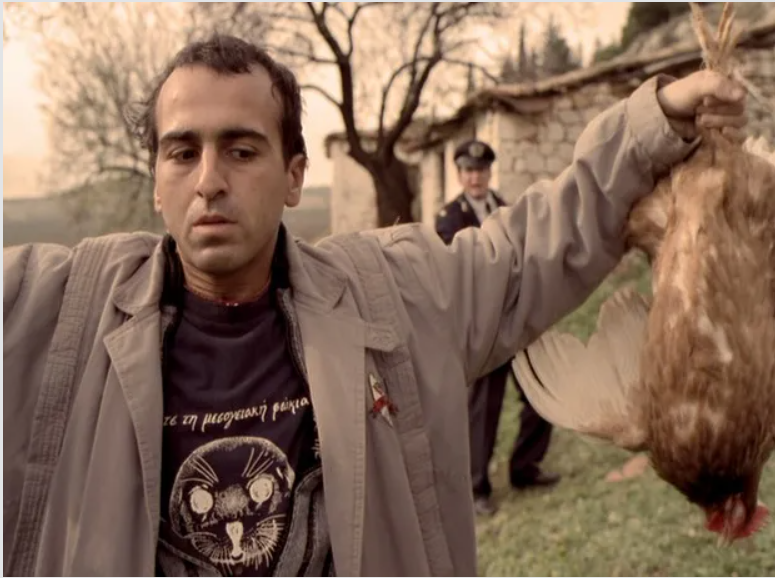
Furthermore, it is worth mentioning that Lanthimos was a member of the creative team that designed the opening and closing ceremonies of the 2004 Olympic Games in Athens. In 2005 the time had come for his first feature film, Kinetta. Until then, of course, he was still an unknown director even domestically. Another director trying to cope with the harsh reality of Greece (especially for an artist) in the hope that the planets will align and he will manage to showcase his talent. Kinetta received quite negative reviews, both from the public and from Greek critics. Characteristic is the unpublished story of a well-known Greek critic who stated that he “couldn’t stand it” and “left” the theater at the premiere of the film, while years later he would declare that “he had recognized Lanthimos’ talent from the beginning.”
The Greek Weird Wave
Everything would change in 2009 – in the year of our Lord 2009 – when the premiere of Lanthimos’ film Dogtooth was screened at the Cannes Film Festival and won the Un Certain Regard and Prix de la Jeunesse awards. The film was screened in Greece in October 2009 and divided Greek society, as fans and haters spoke with fervor and fanaticism about it, having received mainly negative reviews from Greek critics. The main reason was that the film strongly criticized the average traditional Greek family of the time and the conservatism of Greek society in general, combined with some of Lanthimos’ directing and script choices that are still considered by many to be “sick”, “abnormal”, “grotesque”, “degenerate” and “repulsive”. The film would receive an Academy Award nomination for Best Foreign Language Film in 2011 and would become the informal precursor of a new Greek film movement, later called the so-called “Greek Weird Wave” (GWW).
In short, GWW is one of the most characteristic and influential film movements in Greece’s history, and with the spread of films (mainly by Lanthimos) it also influenced world cinema to this day. Other characteristic film movements are the “Golden Era of Greek Cinema” (1943-1970) with the dominance of Finos Film production company and the “New Greek Cinema” (1970-1980) with distinctive directors such as Thodoris Aggelopoulos and Pantelis Voulgaris. The main influences of GWW were the economic crisis in Greece in the late 2000s, along with which came a more general social crisis where artists strongly criticized Greek social values. Along with the economic crisis, the social contract of Greece was also broken. Institutions that were supposed to protect citizens, such as the state, the bank or the family, became instruments of control and oppression and thus any conception of “normal” collapsed. In the environment of the economic crisis, the arts and cinema were particularly affected as large state subsidies stopped. So, the films had a small budget, the directors were confined to small spaces (apartments/hotels) and put more emphasis on the scripts and the film. When we say they put emphasis, we mainly mean that they experimented and the result, instead of a serious social-realist drama about crisis and poverty (like for example Italian neorealism after the Second World War), was the embrace of absurdism.
The basic elements observed in GWW films are as follows. Initially, the main theme is the so-called “Microcosm of Control”, where the directors and screenwriters place the film in a context and environment of control where a “tyrant” applies authoritarian rules. The state/citizen relationship that dominated Greek reality is reflected through the relationship between the tyrant (who usually takes the form of a father figure) and the subject. Another basic theme observed in this type of film is transactional relationships and emotional capitalism. In a bankrupt country, everything has its price, so we see that in the films human relationships are speculative, love is an exchange of services, sex is done for a price (and not always monetary), and actions are aimed at a prize. Furthermore, directors often portray the efforts of individuals to belong to a group or society in a toxic environment, while we often see them avoiding allegory and the films deal with protagonists who are trying to survive in a society that is collapsing (although these films are mainly made after the period when Greece was going through the severe economic crisis).The directorial choices include apathetic characters who speak in a flat, monotonous manner, almost robotic, while many times they constantly repeat their words. The dialogues are awkward, hyper-literal and without passion even if they deal with topics such as violence or sex. The robotic acting observed in Dogtooth becomes a trademark of the entire movement. The above choices perfectly reflect the numb and traumatized society which is dehumanizing in its attempt to survive.
My Favorite GWW Movies
Lanthimos is not only considered the forerunner of this trend, but also the pioneer of its spread in world cinema. Some other important names of the trend are Athena Tsangari, Yannis Economides and Panos Koutras. The films of this particular trend are distinguished by being particularly attractive at European festivals and at this point I will recommend some (an informal top 5 if you will, from least favorite to most), combining some of the most famous and my favorite films of the genre. I will keep it spoiler-free so, read without worry.
- One of the most characteristic examples of GWW is the film Attenberg (2010) by Athena Tsangari (in which Lanthimos appears as an actor). Marina (Ariane Labed) is a socially awkward 23-year-old living in a decaying industrial town with her terminally ill father. Disgusted by normal human intimacy, she prefers the nature documentaries of Sir David Attenborough (whose name she mispronounces as “Attenberg”). As her father prepares to die, Marina decides to investigate the “strange” rituals of sexuality and death with clinical, detached curiosity (is this the most GWW description or what?).
- Another infamous one is the film Miss Violence (2013) by Alexandros Avranas. On her 11th birthday, a young girl walks out onto the balcony of her family’s apartment, smiles, and *see film poster*. While the police and social services investigate, her family, led (of course) by a controlling Grandfather/Father figure, insists that nothing was wrong. They continue their lives like nothing happened. As the film peels back the layers of this hermetically sealed household, the reason for the *see film poster* reveals a horrific reality.

- One of the most famous cult classics: Stratos: The Storm Inside (or, The Little Fish) (2014), directed by Yannis Economides. Stratos (played by the iconic Vangelis Mourikis) is a man of few words who works the night shift at a massive industrial bakery. By day, he is a professional hitman. He lives frugally, saving every euro to fund a prison break for Leonidas, a crime boss who once saved his life behind bars. However, Stratos is a “little fish” swimming in a tank of sharks (loan sharks, pimps, and corrupt businessmen) who eventually force him to realize that his code of honor is obsolete in a bankrupt country. This particular film, despite its dark themes, has remained a Greek cult classic for its funny dialogues and viral meme-worthy lines such as “how did you cut them like that?”, “my stools and my balls”, “we’re not coming in, we’re fucking”, “work you MOTHERFUCKERS” “what show was that? It was a fucking show” and the list goes on. A must watch of the genre.
- In yet another film by Athena Tsangari, this one starring Sakis Rouvas (the singer, remember?) and Giannis Mourikis from “Stratos” (everything is linked inside the Greek Weird Wave Extended Universe), Chevalier (2015) revolves around six men who are stuck on a luxury yacht in the middle of the Aegean Sea on a fishing trip. Boredom sets in, and to pass the time, they invent a game called “The Chevalier.” The goal? To determine who is “The Best”. They begin to score each other on absolutely everything: how they sleep, how well they assemble IKEA furniture, the size of their erections, the list goes on. The winner gets a chevalier ring; the losers get an existential crisis. The film is a clear satire of toxic masculinity and specifically the toxic competitiveness that often prevails among men. Funny and enjoyable.
- Finally, we move on to my personal favorite: Strella: A Woman’s Way (2009), directed by Panos Koutras (a film better than Star Wars btw). The premise: Yiorgos, a man freshly released from prison after 15 years, arrives in Athens to find his family gone. He wanders into a cheap hotel and meets Strella, a young, vibrant trans woman and sex worker who worships Maria Callas. They begin a passionate affair. I won’t go into too much detail because the film relies heavily on its plot, but I think that this basic description alone is enough to pique interest.

Back to Lanthimos
In 2011, Lanthimos filmed his last Greek film, Alpes. One would expect that after the international success and recognition of Dogtooth, a clear path would open for Lanthimos to film movies with greater ease in Greece. Nevertheless, he himself reveals that the reality was completely different, as he faced enormous financial difficulties, unable to secure sufficient resources to finance the film, while only a very few people went to see the film in theaters.
After that, Lanthimos decided to continue his career abroad so that he could make the films he wanted, the way he wanted. In 2015, the film The Lobster was released and the rest is history so we will not go into it further in this article. However, we can still see elements of GWW in his international films with The Lobster being essentially a pure GWW movie with movie stars, where romantic relationships are a prize for success, The Killing of a Sacred Deer (2017) examining once again the dynamics within the family and human life as currency, The Favourite (2018) examining the relationships of power and the working class and sex as a force of exchange, Poor Things (2023) examining the liberation of the protagonist from an authoritarian father figure, and Kinds of Kindness (2024) being an extravaganza of criticism of a toxic work environment, family and oppressive religion. And all these films are permeated by robotic dialogues and spasmodic, uncomfortable dances (the body tries to escape from social control). Some of the scenographic choices have changed, such as the photography, but they serve the same purpose. For example, the static camera that cuts off heads or legs to create a sense of claustrophobia has been replaced with fish-eye and wide lenses that give the feeling that the characters are trapped in a “jar” or bowl.
One thing leads to another and we reach Bugonia (2025).
Bugonia Review
According to ancient Greek literature, the word Bugonia (βουγονία) (βους (ox) and γονή (birth/become)) comes from the belief that bees originate or are born from the dead bodies of oxen and cows. In literature, it is used as poetic symbolism for birth and life through death, rebirth through destruction, etc. The specific theme is obviously familiar to anyone who has watched Lanthimos’ work and the themes of the films that were released in an economically devastated Greece in 2010 that was trying to be reborn. The film is also a remake of the Korean science fiction film Save the Green Planet! by Jang Joon-hwan.
Spoiler-free Section of Review
The film revolves around two young conspiracy theorists who kidnap the CEO of a large corporation convinced that she is an alien who has come to destroy the Earth. Initially, we have Jesse Plemmons’ character, Teddy, an employee of a large pharmaceutical company, who lives in a farmhouse somewhere in the suburbs of the United States, while also being a beekeeper. Teddy, with the help of his cousin, Don, decide to kidnap the CEO of the pharmaceutical company, Fuller (a character played by Emma Stone).
The film is reminiscent of Dogtooth in many aspects (perhaps a polished version of it), as Lanthimos shows cynic, cold elements combined with surrealism. The big difference from Lanthimos’ films so far, at least seemingly, is that here we have a black comedy with clear moments of humor (a large portion of the audience laughed in the room where I first watched the film). Personally, I have always considered Lanthimos’ films steeped in black humor and I believe that having seen Bugonia, many can look back at older films and see the same characteristics. In Bugonia, Lanthimos cauterizes and satirizes catastrophism, conspiracy theories and the toxic behaviors of people when they are obsessed with an idea. At the same time, however, he tries to convey messages regarding ecological destruction, self-destructive tendencies and the profiteering of people and giant corporations. Lanthimos turns from the maximalist world of Poor-things to a claustrophobic approach, like in Dogtooth, and most of the film takes place in Teddy’s house where, after the kidnapping, Fuller plays brain chess with her captors. I admit that until the middle of the film I felt that the story was developing slowly despite the intense dialogues. However, from the middle onwards the stakes become more serious, the tensions rise and before I knew it I was engulfed by Lanthimos’ paranoia and chaos, and the film was over before I even realized it (while the dance scenes obviously could not be missing).
Directorially, Lanthimos is at his best and has now become an expert in depicting chaos and violence to a degree that would make masters like Tarantino jealous (I am referring to a very specific bloody scene). The editing is captivating and combines jump cuts and long takes and, in combination with the score, which consists of scratching strings, out-of-tune pianos, and even jumpscares with noise blasts, intensifies the suspense and tension of the film and really does not let you calm down.
Jesse Plemons is perhaps one of my favorite performances. Although he usually plays eccentric and mentally unstable characters, he always gives something special and here he gives extra desperation, making the character terrifyingly pathetic and balancing between wounded human nature and harmful delusion for both himself and the people around him, delivering a result that we have never seen from him before. The character is not just a stereotypical advocate of conspiracy theories. He is a wounded man from a system that he does not understand and thus invents a narrative that makes sense in his mind while he himself is the hero. He is not a manic character who screams inconsolably, but a soft-spoken, kind (at least as much as a kidnapper can be), and sad character who tries to interpret an irrational world with logic.
Emma Stone has proven that she can play anything and here we see her as a cynical and cold CEO who tries to survive with mind games, but as the film progresses, she embraces a comic character, without succumbing to ridiculousness. Truly enjoyable.
Aidan Delbis’ character, (perhaps the most tragic one), stands worthy next to two huge actors and perfectly shows a character who has essentially fallen victim to his cousin and has become a subordinate, reinforcing the elements of black humor and tragedy.
Cinematographically, Robbie Ryan does not use the fish eye lenses that we are used to from the Favourite and Poor Things and delivers a sharper result, giving a great contrast from the interior of the house to nature. Inside the house, the lighting is harsh and creates ugly shadows, emphasizing the sweat and imperfections on the characters’ faces. In contrast, in nature, we have intense contrast and hyper-saturation that gives an effect similar to the perfection that advertisements want to present. The message is clear. Nature is perfect, humanity is ugly.
Spoiler Section of Review
Teddy, in addition to the alien theory, also has personal reasons for wanting to abduct Fuller. The first is that the company he works for, among other things, produces pesticides that seriously harm bees. The second and deeper one is that his mother is in a coma due to the side effects of the company’s drugs. The kidnapping scene is steeped in black humor and personally reminded me strongly of the kidnapping in Fargo, where unpredictable factors contribute, chaos prevails and not everything is “professional”.
Although the movie is shot in such a way so as to clearly show you and try to convince you that the theory of the two cousins is completely unfounded, knowing Lanthimos’ style, throughout the movie I was thinking “how fun it would be if she really was an alien”, without being 100% convinced. However, it is not surprising when in the last act of the film, there is a major plot twist, where the theories of the two male protagonists are confirmed and Emma Stone’s character is indeed an alien whose goal is not to destroy the Earth, but to save it by destroying human life, as humans are the real virus. The film suddenly turns into science fiction with the entry of aliens, spaceships and alien technology and the character of the film reaches the limits of the surreal. The aliens finally achieve their goal and destroy humanity by exterminating every trace of human life, in a horrific montage where we see many locations on the planet, from streets and landscapes to factories and apartments, and all the people are dead while the bees return to their nests. We see the bees being reborn through death (a Bugonia one might say).
At this point, we must also mention an unpublished (perhaps ridiculous) story, where Lanthimos, wanting to pay tribute but also a small reference to his homeland (Greece), wanted to film a scene in the Acropolis of Athens, around the Parthenon, where there would obviously be many corpses of tourists who came to visit and admire the monument. However, the Greek Ministry of Culture did not give permission for the filming to take place and, in a relevant public announcement about the reasons why the permission was not given, it detailed the ending of the film, ruining the twist for those who had the misfortune to read the announcement (fortunately I was not one of them). Unbelievable and yet Greek (as we say here in Greece)! To his credit, Lanthimos, although stating that he was disappointed with the outcome of the case, found another way to reference Greece, adding a scene filmed on a beautiful (and characteristic) Greek beach on the island of Milos (apparently filled with human corpses).
Conclusions
For the most part, I really liked the film, and I would recommend it unreservedly, especially to people who have liked other Lanthimos films. As far as I know, Lanthimos will be taking a break from directing (and a very well-earned one, considering the quality but also the quantity of films he has delivered in recent years), but I will eagerly await his return. Indicatively (and without this meaning anything at all), I rated the film 3.5/5 on my personal account on Letterboxd. While if I wanted to make a ranking of Lanthimos’ entire feature-length directorial oeuvre , with my favorite at position 1 and my least favorite at position 9, this would be it (at the time of writing the article):
- Dogtooth (4/5)
- The Lobster (4/5)
- Poor Things (4/5)
- Bugonia (3.5/5)
- The Killing of sacred deer (3.5/5)
- Favourite (3.5/5)
- Kinds of Kindness (3/5)
- Alps (2.5/5)
- Kinetta (2/5)
That’s all folks! Thank you for reading my article/essay/review. See you at the next one.