 Judy Lin
 Bunny cop, sly fox, mouse boss, the Lemming Brothers’ bank… I’ve always been deeply obsessed with the world of Zootopia.
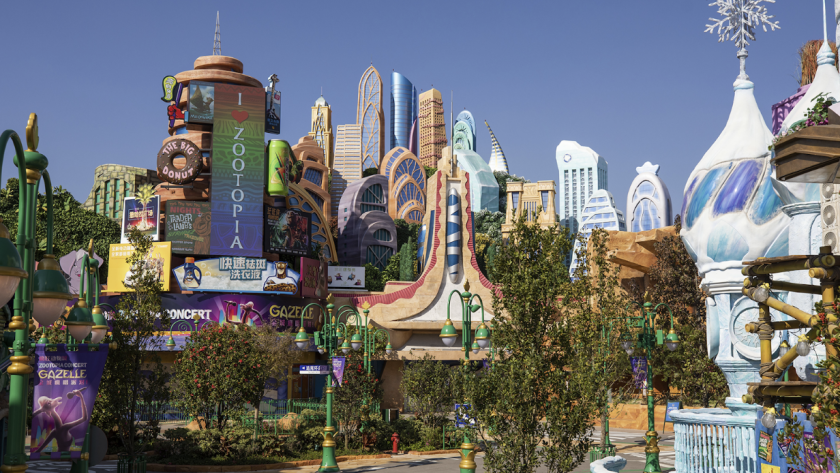
Two years ago, Shanghai Disneyland opened the world’s first Zootopia-themed land, and the level of detail was honestly insane: giraffe gyms, paw prints on the roads, upside-down toilets, massive Gazelle billboards. Every facility is designed for animals of different sizes and the wordplay in brand names is everywhere. At the centre of it all, of course, is the Zootopia Police Department—the narrative core of this world. Riding in a police car to chase criminals made me feel like I was part of the force myself, actually living in Zootopia. The experience was genuinely cool. And the reason it works so well is that the city feels complete yet open-ended: a world that looks polished on the surface, but leaves narrative ‘interfaces’ everywhere, full of possibility.
So when Zootopia 2 was released in the UK in late November, I went straight to the cinema as part of the first wave. I wasn’t just there to see familiar faces. I wanted to see how Disney would add a new ‘expansion pack’ to a world I’m emotionally invested in. After watching the film, I can fortunately say that it didn’t fall short of my expectations. It’s a solid and well-made sequel, especially impressive given the ten-year gap and the cultural weight of the original.
What made Zootopia special was never just the characters, but also the world itself. The city isn’t a decorative backdrop; it’s a sharp metaphor for human society, particularly within an American political context. Beneath the cute designs and humour lies a serious discussion of prejudice, fear, and power. This balance—approachable on the surface and political underneath—is what gave the first film its depth and cultural longevity.
The sequel largely understands this. It continues the established world while expanding it in a controlled way, and it spends more time developing Judy and Nick’s relationship now that they are official partners. These two threads—character dynamics and world expansion—are where the film is most interesting.
Character Dynamics:
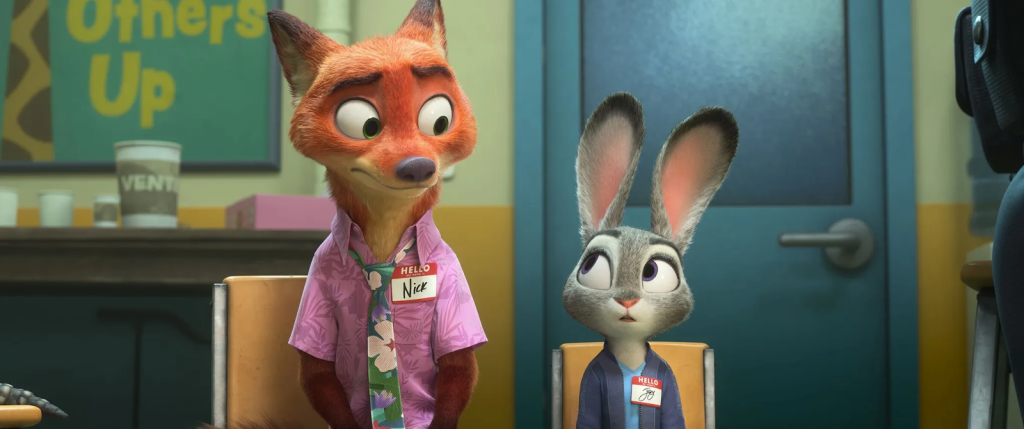
Judy Hopps and Nick Wilde are easily one of Disney’s most popular duos. Many fans openly regard them as a romantic couple online. Disney, however, continues to use the more neutral term “partner,” and in my view, that choice makes sense. They are perfectly coordinated colleagues, closer than friends and almost family, having gone through life-and-death situations together. At the level of cinematic language, however, their interactions rarely feel like deliberate romantic signalling.
At the same time, “partner” carries different meanings in queer contexts, often replacing the binary “boyfriend” or “girlfriend.” Disney has produced countless heterosexual romance templates, such as the classic prince-and-princess pairing, so when a male and female lead share strong chemistry, audiences naturally project romantic expectations. But I would argue that Zootopia’s real social value lies precisely in refusing to reduce their bond to romance. Calling it love, in the conventional sense, would actually flatten it.
To understand their relationship, it helps to look at their backgrounds. Judy comes from a rural setting and becomes a police officer through persistence and faith in the system. She is idealistic, morally driven, and confident that institutions can deliver justice. Nick, shaped by childhood bullying and systemic prejudice, learned early on how cruel society can be. His cynicism and survival instincts are learned responses, not personality quirks. Their first adventure allowed both of them to confront internalised bias and find a form of mutual redemption.
This shared history creates a deep bond, which is why Zootopia 2 opens with them attending partnership therapy. The scene is played for humour, but it is surprisingly revealing. Judy often dominates the relationship, not just because she is energetic, but because her sense of justice can be uncompromising and even reckless. Nick maintains his relaxed exterior, yet increasingly functions as the strategist and emotional stabiliser, supporting Judy’s forward momentum.
These differences naturally lead to conflict. Judy is willing to risk everything for a case, while Nick is more cautious and unwilling to gamble their lives so easily. Their values do not come from nowhere; they are rooted in upbringing and long-held perspectives. The eventual reconciliation, achieved through honest communication and vulnerability, feels less like a romantic resolution and more like the necessary growing pains of any deeply intimate relationship. When Nick says, “love you, partner,” it genuinely landed for me—not because it confirmed romance, but because it acknowledged trust, loyalty, and a form of mutual belonging.
Yes, the reconciliation arc itself is somewhat predictable, but Disney is deliberate here. By framing Judy and Nick’s relationship as broader than romance and deeper than friendship, the film opens an ambivalent space for viewers to delve into. Those who value emotional depth can read Judy and Nick’s bond as non-romantic but profound, while fans who ship them romantically are free to project their own interpretations. Disney understands that cultural longevity often comes not from definitive answers, but from leaving room for audiences to invest themselves. “Love you, partner” works precisely because it serves both readings at once.
World Expansion:
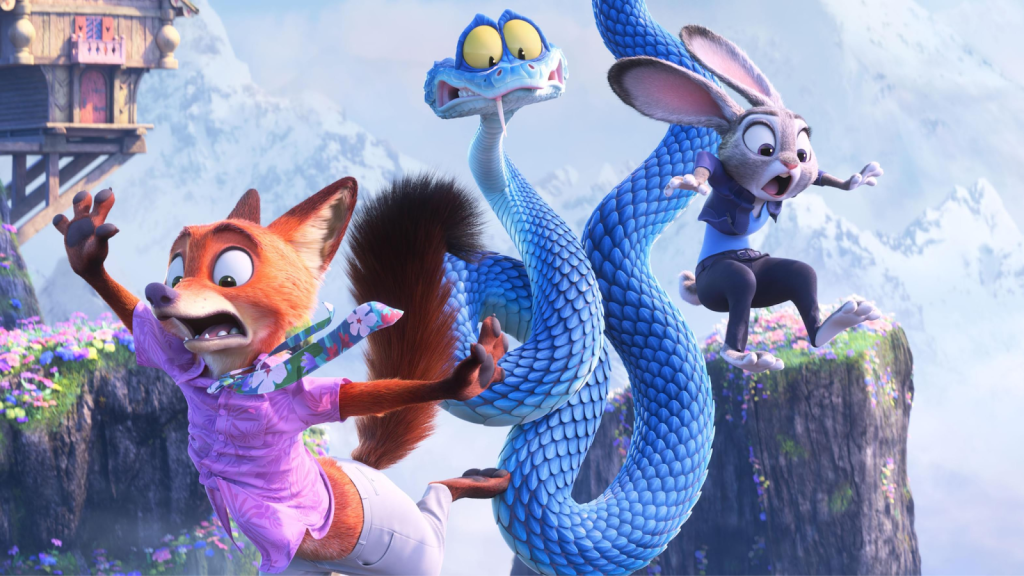
The sequel’s other major strength is its vertical, rather than horizontal, expansion of the world. Instead of making the city bigger, Disney delivered an act of archaeological storytelling, uncovering layers of Zootopia that were always implied but buried; specifically, the spaces belonging to reptiles. The first film’s social commentary, brilliant as it was, operated within a simplified mammalian binary (predator vs. prey). If they tried to integrate all vertebrate classes in the new film, it would risk ecological and narrative chaos.
Introducing reptiles is therefore a clever choice because they occupy a middle ground in the mammalian-centric narrative, complicating their inclusion as citizens. The Marsh Market leans into the discomfort: here, fish are openly traded and insects are consumed, and the marginalised communities (aquatic organisms, such as seals and sea lions) that thrive in this grey zone are visually and culturally distinct. I was particularly drawn to the underwater bar — a space that masterfully transforms ecological niche into social metaphor. Lizards lounging in the haze, playing blues, and sipping mysterious brews don’t just create a cool vibe; they evoke the historical resonance of Black American juke joints. These were spaces of cultural creation forged by and within segregation. The bar, therefore, isn’t just a hidden location; it’s a political refuge, a testament to a community making a home in the margins that the mainstream city has overlooked or intentionally excluded.
Gary De’Snake, the new reptilian character, is thoughtfully designed. His single fang, soft voice, and large, innocent eyes disarm the primal fear associated with snakes. His physical limitation, a body without limbs, is a constant, quiet reminder of the built-environmental bias towards mammals. His backstory is where the film’s history depth emerges: the theft of his grandmother’s urban-planning wisdom and the literal burial of reptilian heritage under the snow of Tundratown is a potent allegory for colonial extractivism and Indigenous erasure. Through Gary, Zootopia acquires a past tense, revealing that its gleaming utopian present is built upon a foundation of systematic forgetting.
By contrast, the handling of the Lynx family antagonists feels somewhat thin. They are reduced to a symbolic shorthand for “unethical capitalism,” with their greed and moral corruption lacking sufficient narrative build-up or motivational depth. This simplification can be read as a trade-off within the sequel’s limited narrative space: when the core task is to securely integrate the historical arc of reptilian civilisation, villain complexity is inevitably deprioritised. Even Pawbert’s spy-thriller twist feels predictable, as its lack of emotional layering prevents it from delivering any genuine narrative surprise.
That said, it is worth noting that the true charm of the Zootopia franchise has always resided in its fleeting yet unforgettable supporting characters. From the sheep shaved into a bikini pattern to Mr. Big, the shrew mob boss, even brief appearances consistently enrich the world’s vitality and internal coherence. By comparison, the Lynx family fails to carry forward this tradition of “small roles with outsized impact.” Their flatness reads less like a calculated narrative compromise and more like a creative shortcoming. After all, a truly compelling antagonist should, like Mr. Big, not only propel the plot forward, but also feel like a world unto itself.
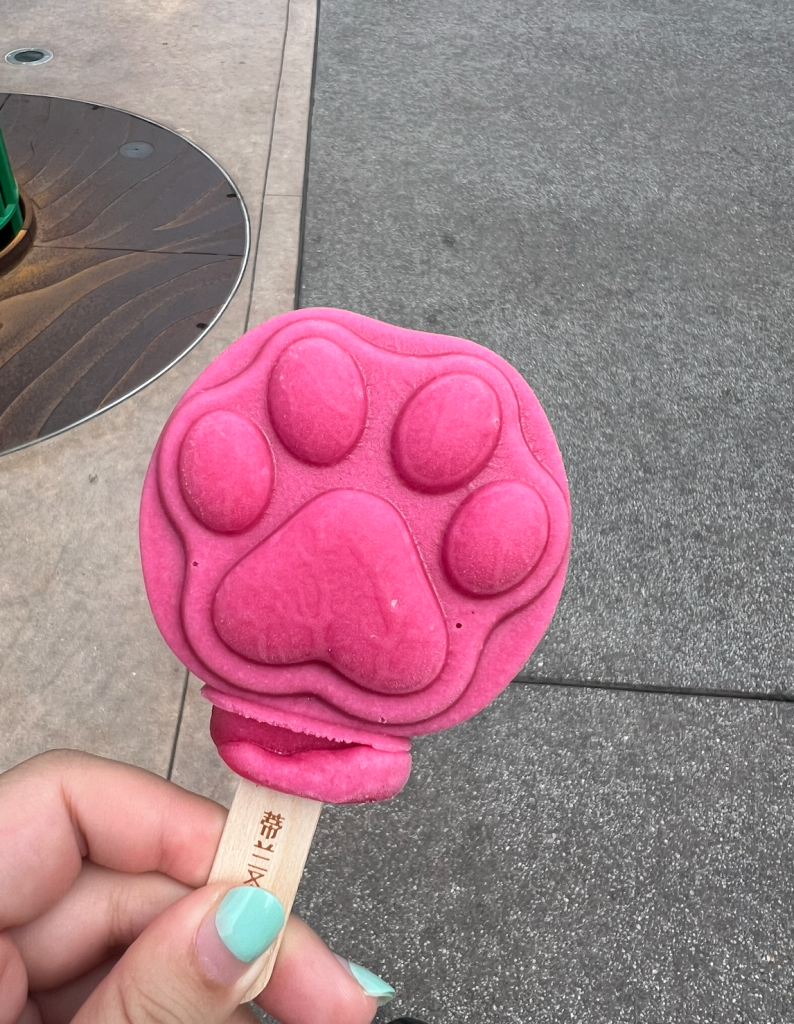
Overall, Zootopia 2 is a sequel that delivers for fans. Its world-building remains careful, intelligent, and politically aware, and while the emotional arc and villain design have their limits, those compromises are understandable for an all-ages animated film. But stepping out of the cinema and back into reality, we know that the real world is never a perfect utopia—its shadows are everywhere. Perhaps that is why Zootopia still matters. Sometimes, the best response is simply to walk into Disneyland’s Zootopia, buy a Pawpsicle, and allow yourself, for one magical day, to forget the anxieties and injustices of real life.