 Noor Grewal
 “Let everything happen to you. Beauty and terror. No feeling is final.”
Neeraj Ghaywan is one of contemporary Indian cinema’s most compelling storytellers, known for
his emotionally charged, and socially conscious films. Born in Hyderabad, Ghaywan made the
transition from engineering and corporate work into filmmaking, beginning his career with short
films and as an assistant to Anurag Kashyap. His debut feature, Masaan (2015), won
international acclaim, including awards at Cannes, for its sensitive portrayal of caste and
societal pressures in Varanasi.
With Homebound (2025), Ghaywan returns to the international spotlight, with the film originally
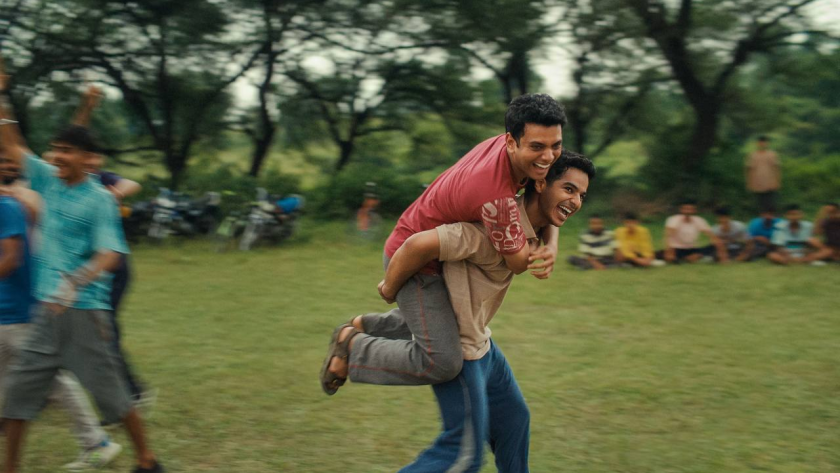
premiering at Cannes, and tells the story of two childhood friends from rural India navigating
caste and ambition during the COVID-19 lockdown. It’s based on a true story, originally told in a
New York Times essay. Today we sat down with Neeraj Ghaywan, to discuss honesty and
empathy in storytelling, and how he gives voice to communities often absent from mainstream
Hindi cinema.
______________________________________________________________________________________________________
Thank you so much for taking the time to talk with us. First of all: gorgeous film. It left me
in tears. It’s so rooted in traditional culture, but the way it’s composed and approached is
so different to other films. Especially because it’s based on, or inspired by, the New York
Times essay. It’s been a few years since you’ve released a feature. What made you want
to tell this story now?
Neeraj Ghaywan: Actually, the story was… I mean, it started when it was written because it was
given to me, and when I read the story, something broke inside of me, and it affected me. But
beyond that, I also took a lot of opportunity to see a lot of things that I couldn’t.
Firstly, you know, you see that villages are being absent from Hindi cinema? Yeah. A large part
of the country now lives in rural India, but we don’t talk about those characters. They’re mostly
stereotypes, even if they are. So one of the intent was that, to talk about, to set a story there.
And also when we talk about marginal identities, be racial minorities or religious or caste or
sexual minorities or even migrants, you always speak of them in statistics. And that is an
important thing to make a statistic, but it also dehumanizes them, because it doesn’t give… it is
sort of when people from urban India speak about it or urban places around the world, they
speak with hollow sympathy, which lacks accountability. So we don’t genuinely want to know
what happens to them.
So this is an attempt: maybe what if you pick two people out of their statistics? And try to
understand what are their dreams, what happened to them, and what places did they come
from, you know, what did they leave behind? Why did they leave behind? And what’s ahead for
them?
So this humanizing aspect was one of the genuine reasons for making this film, and also to like
sort of look back. I borrowed a lot from my childhood. I grew up in a big chawl house. A lot of my
experiences, even the shame of hiding and not fully disclosing myself for like 35 years, I put it in
this film. Like, I also was scared to put out my own shame in that way. So yeah, in that sense, it
was also personally quite cathartic.
I think that’s what made it so emotional for me. Especially because it’s played at Cannes,
and now it’s played at TIFF, and it deals with things like entrance exams and social
pressure that feel very native to India. How did you go about translating that story for
international audiences?
Neeraj Ghaywan: Yeah, it was friendship. Friendship is actually a human theme. That base was
needed to be so transformative and to be accessible around the world.
One of the interviewers who spoke to me after the Cannes screening said to me that he was
deeply affected and it was very personal for him. He broke down and he said it reminded him of
the time of the liberation of Ireland, and it reminded him of the Ireland–UK conflict. So you see,
it’s so universal that it can make you relate to something of your own.
The dialogue also felt so natural, when characters are talking or arguing, they sound like
real friends. How do you go about crafting a script so it doesn’t feel artificial?
Neeraj Ghaywan: Dialogue can only take you to a certain extent. I tend to borrow a lot from real
life. I tour around villages and try to listen to them and hear them and talk and see how they
express.
A lot of also Instagram reels. Yeah. You know, I look into a lot because I started following a lot of
these influencers from small towns and villages to see what they do. And it’s fascinating, you
know, how the internet has divided that bridge, that gap.
For instance, I saw this Instagram, and she lives in a hut. She’s from a village and she lip-syncs
to all Beyoncé’s songs. It’s so sweet. And she does it so just, that it’s like, yeah. So you know,
that divide is not there anymore. I mean, that’s very good to see.
And working with young actors, what was the casting and storytelling process like?
Neeraj Ghaywan: See, the thing is, firstly, I want to go a little more interesting, because you
know, different filmmakers will make a film, it’ll go to a festival, it’ll get applause… that’s just like
the clap of it, right? It is just selfish. Because if it doesn’t get seen by the intended people, what
is the point?
So I wanted it to travel a little more. And also, I have made it a little more accessible compared
to festivals. Yeah. Because I wanted it to be relatable and I wanted it to be seen by everyone.
Which was the intent why I’ve got these actors, not just because of where they come from, but
also because they carry deep empathy. Not just the actors, even the crew members, all of them.
Everybody who’s been part of this film has to come with genuine empathy and inquiry. You
know, it can’t be one more film for them.
So when that intention is there, then we go the whole distance, because everybody knew that
what we are trying to tell, stories of people, and that is bigger than making this film. Because it’s
our moral and higher responsibility to talk about people who’ve never been spoken about. Their
lives are never represented. They are never seen. And in that intention, when you come with
intention, people generally give their all.
It’s a film that discusses class, ambition, and representation, what do you hope the
audience takes away from it?
Neeraj Ghaywan: You know, because the world right now, the way it is, we could do with a lot of
empathy. Because I think the root of it is empathy. Because you… and I feel that people who
you differ with, whose opinions differ with you, we tend to dismiss. We tend to pass judgement
or we tend to cancel people because of their opinions.
I feel we need to have everything… to hear the other side. Even if you disagree with them,
maybe you ought to listen to them.
There is so much theatre in the world right now. I think the intelligence of the system is also to
like maybe sit back and see, have we gone too far? Maybe we should sit down and introspect
and calibrate ourselves and develop a sense of empathy. You can develop it, I think.
Is there a line from the movie, or something connected to it, that feels personal to you?
Neeraj Ghaywan: You know, actually when I read the story, there is a quote that came to me in
my mind. This is one of my quotes of quotes. That has been the theme of the film. It says:
“Let everything happen to you. Beauty and terror. No feeling is final.”
It’s so gorgeous. It moved me. So that quote has actually been the theme of the film and it’s
been an inspiration. Every story I write has that.