 Sothysen Tuyhor
 Introduction
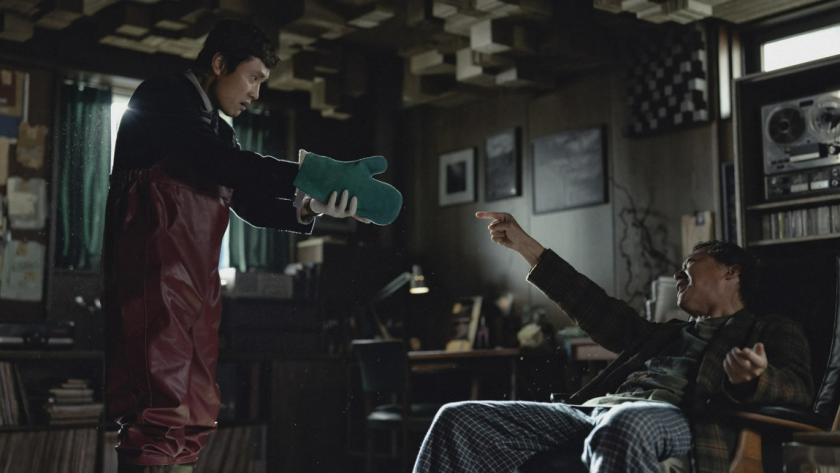
It all begins with an overhead establishing shot of some nature, continues along with a tense police trail, explodes with some gunshots and ends with the capitalist complex looming large over all. At least it seems so. Of the many cinematic masterpieces which we have been gifted in 2025, Kleber Mendonça Filho’s The Secret Agent (O Agente Secreto) and Park Chan-wook’s No Other Choice (어쩔수가없다), which share these key beats, serve as some of the most notable to me. For one, I am a huge fan of dark or noir political thrillers. La Haine (1995) and Z (1969) remain some of my all-time favourite films. It is a genre which opens itself to plentiful amounts of variety and, in recalling the practical theorem that everything is political, serves as a versatile tool to engage with our own realities and cultures. Perhaps more particularly interesting though is when these films are looked at from a comparative length. Not only are Park and Filho both filmmakers who transferred from a pathway of film critic to director, but both works are yet new additions to their respective countries’ national cinemas. While they share some key filmic beats, they come from legacies which share key historical beats. Anyone who has been tracking the festival trajectories for Brazil and South Korea has probably pointed to a period of roughly five to six years, at least no longer than a decade, where “hits” have outlined an international ascension for these countries. I say this only as an anecdotal observation, that what gets the festival and press attention, video essayist talking points and the surprisingly still relevant awards ceremonies (or at least one which I refuse to uphold) has only recently begun to appreciate these cinemas.
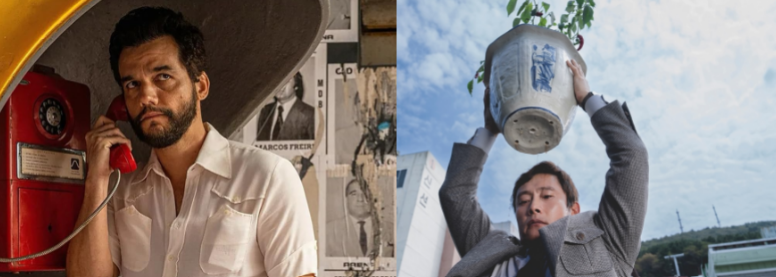
For Brazil, the most recent wins have come with Filho’s other recent films like the documentary Pictures of Ghosts (Retratos Fantasmas) (2023) along with the narrative feature Bacurau (2019) and from Walter Salles the masterful biographical drama I’m Still Here (Ainda Estou Aqui) (2024). For South Korea, the most notable have been Park’s previous work Decision to Leave (헤어질 결심) (2022) and Bong Joon-ho’s triumph of Parasite (기생충) (2019). Perhaps the more seasoned read may be wary of Hong Sang-soo’s A Traveler’s Needs (여행자의 필요) (2024), as yet another work to the slow cinema auteur’s oeuvre, and Lee Chang-dong’s Burning (버닝) (2018). Yet, I feel it would be a great disservice to Brazilian and South Korean cinema to only see this period of great work as but some convenient uptick in quality works being produced. I wish to help recontextualise these national cinemas and therefore the place of The Secret Agent and No Other Choice as welcome new pieces to already rich cinematic heritages. They serve more so as the continued evolution of the revitalisation periods of both countries’ cinemas started in the 1990s, periods which themselves succeed from long and interesting film histories.
What is most fascinating, and convenient as a structuring point for this piece, is in how offering a comparative historical analysis to Brazilian and South Korean cinema reveals some similar events and beats. This serves not to bunch up the two national cinemas but rather offer insights into the intersection of politics with cinema and still further grasp the uniquities of each country in spite of any possible or relevant historical legacies. I started writing this piece with no particular thesis in mind. The only goal was to detail cinematic history and theory and then perhaps see anything of interest. There will undoubtedly be plenty of revelations of historical materialism and cinematic reactions to socioeconomic changes. But this piece functions not as any particular theorising about mechanisms of politics or filmmaking philosophies, it is an understanding, appreciating and celebration of these countries’ cinema through the essential lens of politics and history. So please join me for this closer look into cinematic history. Perhaps by the end you may also be able to come out of it more appreciative of such cinematic heritages.
The Beginnings
“uma época cheia de pirraça”
“a time of great mischief”
— Extract from opening text of The Secret Agent
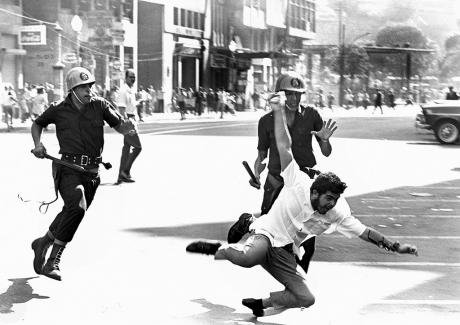
Our story begins with the post-war period, more so the 1960s to be well beyond the second World War and the Korean war. Rhee Syngman was out of office, João Goulart was still in office. A time for great revolution and social commentary for cinema in South Korea and Brazil.
Brazil was the beginning of a new cinematic movement: Cinema Novo (New Cinema). What had preceded was the slapstick and burlesque “chanchada”, a genre not too dissimilar to Hollywood, a desperate imitation held by a façade of figures like Carmen Miranda of Chiquita banana fame. Cinema Novo by that regard was a current of critical filmmaking that “served as a passage to reality”, as put by Dr. Francisco Mazza (2025), a lecturer in Film and Sound Production here at UCL, compared to chanchada’s somewhat imperialist and mass-entertaining core. The post-war context of presidential administrations like Goulart, and preceding presidents, offers an initial point to understand the intersection between post-war politics, leftist movements and how they inform filmmaking. A desire to part from the traditional and expensive institution of studios, seen for example with the Italian Neorealism movement, where they are either biased and inaccessible or simply nonexistent, as well as (re)construct reality rather than merely representing through dramatisation. Perhaps akin to the magical realism that Latin American literary figures like Gabriel García Márquez pushed forth, but we will get back to this. Figureheads of the Cinema Novo movement like Glauber Rocha sought to realistically capture Brazil’s people and the diversity that characterised the nation in films like Black God, White Devil (Deus e o Diabo na Terra do Sol) (1964) which depicts acts of violence by peasants in order to work towards liberation. Initially drafted and delivered in 1965, Rocha’s (1995) manifesto accordingly tries to hit home this point of Cinema Novo being about social consciousness and being a “bit transcendental”, according to Dr. Mazza (2025), when he proclaims:
“There resides the tragic originality of Cinema Novo in relation to world cinema. Our originality is our hunger and our greatest misery is that this hunger is felt but not intellectually understood.”
Dr. Mazza clarified to me this slight tragedy for the movement. Artistic inspiration which was “extraordinary for the time” but “not appreciated at the time” (Mazza, 2025). Rocha and Cinema Novo were focused towards unravelling and tackling Brazil on the artistic level in all aspects of that word of “Brazilian cinema”. It was Brazilian in its attempt to proclaim a popular and truly independent cinema where the defunct attempts at building a national film industry, Companhia Cinematográfica Vera Cruz, had not been able to and cinema in its experimentation which was valued far more than entertainment (Paiva, 2013, p. 30). However, much like one of the former heads of production for Vera Cruz, filmmaker Alberto Cavalcanti, the 1964 military coup in Brazil that installed a long-standing dictatorship greatly cut down Cinema Novo’s drive. Only the occasional film with some essence of the Cinema Novo spirit towards the end of the dictatorship, like Hector Babenco’s Pixote (1980), or works disrupted then completed when the atmosphere was more accommodating, like Eduardo Coutinho’s documentary Man Marked for Death, 20 Years Later (Cabra Marcado Para Morrer) (1984). As The Secret Agent showed, a film firmly set in the mischievous dictatorship period in the year 1977, Hollywood, and to some extent unconscious imperialism, returned with Jaws (1975) and more foreign blockbusters.
South Korea’s history, both cinematic and political, differed only in the difference that the period for cinematic glory was comparatively short-lived due to the return of strict control under Park Chung-hee’s coup and regime. The ousting of Rhee Syngman in the April Revolution (1960) paved the way for a brief lifting of censorship and thereby an opportunity for films previously locked out of production or visions not matched towards anti-communist heroism, and instead social realism, to release (Cho and Lee, 2019, p. 42). Such a period saw the release of celebrated works like Aimless Bullet (오발탄) (1960) and The Housemaid (하녀) (1960). The 1961 military coup restricted the “Motion Picture Code of Ethics Committee”, which had to “suspend its activities only eight months after its establishment in August 1960” (Cho and Lee, 2019, pp. 42–44). Although short-lived, this “renaissance” was not lacking in any sense of spirit for change or social commentary like Cinema Novo (Cho and Lee, 2019, p. 42). Most particular are the dominant genres of the time: family dramas and historical, royal court dramas. The latter stands as a significant indicator of the move towards epics and spectacles that foreshadowed the vast and sweeping economic changes under the Park dictatorship. But more relevant comparatively was the family drama which set political dispositions through the structure of families’ generational divides. The younger generation being the initiators of the revolution and the hesitant-to-change parents stuck in their ways, perhaps even the corrupt former agents of the overthrown Rhee government.
Another difference perhaps is that the well known works in this period were much more urban-centered as well as less explicitly leftists. Rocha’s great peasant struggle amidst the fields and hills of Brazil are substituted for urban expanses like Seoul, where change happens within internal or interpersonal hijinks as big as the family. The people’s struggles were of course different between the countries, but it was the people’s struggles nonetheless that filmmakers like Yu Hyun-mok and Kim Ki-young were trying to depict. This gets to the third key historical beat after shortcomings of post-war identity seeking and social commentaries of the sixties and seventies: military dictatorship. It is intuitive to think that the quality of national cinema would change drastically in the face of military coups and massive political oppression. It was mentioned earlier that Park Chung-hee’s dictatorship restored strict control over filmmaking codes. However, it is less intuitive how the quantity of films produced and released change, and what a change in quality even looked like. It would be convenient to just state that a simple block of more dictatorship led to less films, or even just less good films. As if the Hollywood neocolonial dynamic of dependency returns in a non-reciprocal manner. But there are smaller periods to highlight here.
Dictatorship, Reformation and the Spirit of Social Critique and Freedom
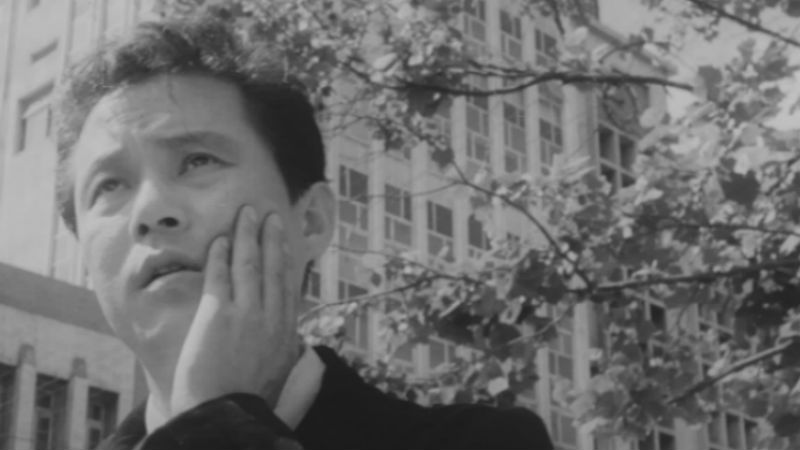
| “Daqui e o meu fuzil para não deixar pobre morrer de fome”“Here’s my rifle to save the poor from starving.”— Corisco in Black God, White Devil(Deus e o Diabo na Terra do Sol) (1964) | “가자! 가자!”“Let’s get out of here!”— The mother in Aimless Bullet (오발탄) (1960) |
Cinema Novo itself has been structured in Brazilian cinematic histories as containing three phases: the initial or first phase (~1960-1964), often more utopian and rural in its realist aspirations, the second phase (1964-1968), more disillusioned and critical in its more urban settings, and the third tropicália or tropicalismo (“tropicalism”) phase (1968-1972), wherein kitsch and exaggerated if not surreal styles tried to further conceal commentary (Johnson and Stam, 1995, pp. 32–40). Each continuous period was caused less so from some internal artistic or movement-based disagreements as paradigm shifts but more so responses and reactions to political economic changes of the time. Even the beginning of Cinema Novo itself, as aforementioned, was the product of neocolonialist domination which thus refused a domestic industry and necessitated a low-budget realism. The second iteration came about with an additional coup within more oppressive elements of the Brazilian military, which included an essence of logic that aspects of leftist figures and filmmakers had lost a little bit of the current narrative in a Brazil getting not one bit further from economic inequality while also somehow effectively tackling foreign imperialism. It is said that filmmakers recognised that Cinema Novo was “popular” in the sense that it related to and told the stories of the Brazilian people, but did not become “popular” in the “sense of having a mass audience”, the reality was that if “the masses were often on the screen, they were rarely in the audience” (Johnson and Stam, 1995, pp. 36–37). This phase saw the creation of a distribution collective, “Difilm”, and an artistic vision more palatable to popular appeal. Accordingly, the tropicália phase came at a time of ever-increasing oppression following “Bloody Friday” demonstrations that evidenced mass discontent followed by further crackdown by the military dictatorship. The time came for a great substitution. Rocha and other Cinema Novo filmmakers were exiled or forced to work within incredibly strict rules to ensure funding, which meant even more appeal ham-fisted onto the screen.
South Korean cinema had relatively different controls and its greatest oppressive years also did not come until the Yushin constitution of 1972 that established the Fourth Republic of Korea that consolidated Park’s presidency-turned-dictatorship. As a result the 1960s became an arena for but a rather light grip of control over the industry. Quotas, censorship and licenses for aspects like budget were controlled leading to a slightly different trajectory. Where Cinema Novo perhaps still saw consistent output and perhaps the gradual growth due to mass appeal, essentially a supply learning to meet or establish demand, South Korean cinema began solely on supply. The incentive for cinema as a strategic tool for massive cultural influence was not lost on the Park government, and so the diminishing of independent productions and a sole pipeline of officially sanctioned productions led to a mass produced system: “A vicious circle unfolded (…) where per-film profitability decreased, forcing production companies to take a low-budget strategy, reducing per-film budgets” (Cho and Lee, 2019, p. 45). On the one hand was the desire again for mass appeal due to these political economic pushes. Family dramas evolved into affairs more filled with slapstick comedy, historical action and horror displaced historical royal court dramas. But that is not to say that nothing suggestive of quality could be considered, part of the attempts to try and enrich and “celebrate” (South) Korean culture also saw a quota of so-called “literary films”, which underlined more artistic approaches from its derivation from literary adaptations (Cho and Lee, 2019, p. 46).
One big difference in spite of relative similarities was in the presence of foreign, especially Hollywood and Hong Kong, films. Cultural and thereby ideational and political economic unity remained a stronger agenda for the more homogenous South Korea, previously under the assimilation of Japanese occupation, compared to just pure state power which could only play towards Brazil through the indiscriminate barrel of a gun or a voice to speak within some rules of the government. This tightest period in the 1970s saw a breaking point for a film industry already in a vicious economic cycle now being kicked down by broadcast television. The 1979 assassination of Park was followed by only a brief respite before Chun Doo-hwan’s own coup, which saw a profound liberalisation on foreign film quotas and erotic content in film. It serves as an interesting and later occurrence relative to the pornchanchadas which emerged during the tropicália period. The main conclusion seems to suggest that it was certainly an effective way for the film industry to make money, both in Brazil and South Korea. For Brazil it focused back towards Embrafilme, the singular state production and funding company, for South Korea it went to any production company that existed following the abolition of the state approval of production company formation. Perhaps some resistance has an effect on “artistic freedoms”.
This thus gets to the final chapter of our histories before we hop back into the more familiar territory of the twenty-first century. The period of the 1980s somewhat saw a return to form in terms of artistic freedom within both countries. The Embrafilme era saw looser control by the military as well as easier access to filmmaking funding and equipment, hence the aforementioned Pixote (1980) and Man Marked for Death, 20 Years Later (Cabra Marcado Para Morrer) (1984). Meanwhile South Korea’s mass import of more Hollywood films signaled an imperative for more effort. With room for more social critique again, competition from outside due to no quotas and the ability to make independent productions again, South Korean filmmakers going as far as the early 1990s came out with anywhere from exploitative copies of US, Japanese and Hong Kong media franchises to attempts to make more dramatic and socially realist films. However, the Asian financial crisis and the IMF loan requested by the South Korean government, both in 1997, saw one more restructuring in which the mega-corporations, chaebols, of the country began diversifying into entertainment in terms of both production and exhibition. Multiplexes were built, and cinema became more of a consumable product to the people. This great restructuring for one thing was significant due to this neoliberal current changing the Korean family structure and also pushing for more critically acclaimed films like Park Chan-wook’s “debut” (at least he considers it so) Joint Security Area (공동경비구역 JSA) (2000), Bong Joon-ho’s The Host (괴물) (2006) and Kang Che-gyu’s Shiri (쉬리) (1999). This marked the beginning of the Korean New Wave which some may consider as continuing today although Paquet (2010, p. 3) differentiates the successor of this period as “New Korean Cinema” where Park and Bong, among other South Korean filmmakers, continue to make and release films today.
Embrafilme, on the other hand, faced a different fate. With the end of the military dictatorship in 1985 but the 80s still marking the so-called “lost decade” of the economy with national debt and hyperinflation Brazil saw no necessary growth in the cinema as a still nationalised industry. Neoliberalism’s introduction marked a far more unfortunate direction as accusations of clientelism, among other complaints, pushed for a call to privatise Embrafilme and the industry as a whole. Gone, to some extent, was the accessible funding for films. As Dr. Mazza (2025) told me, only the rich São Paulo-based production companies, like those under Walter Salles and Fernando Meirelles could afford to make films. After all, São Paulo’s legacy to the film industry can be seen when it became Brazil’s third UNESCO “city of film” in 2025 (UNESCO, 2025). As a result, the 1990s was a comparatively stark period for Brazilian cinema. That is not to say nothing was made. Salles most notably made Central Station (Central Do Brasil) (1998) while Meirelles, co-directing with Kátia Lund, made the internationally acclaimed City of God (Cidade de Deus) (2002). But what now of the twenty-first century?
Contextualising This New Era
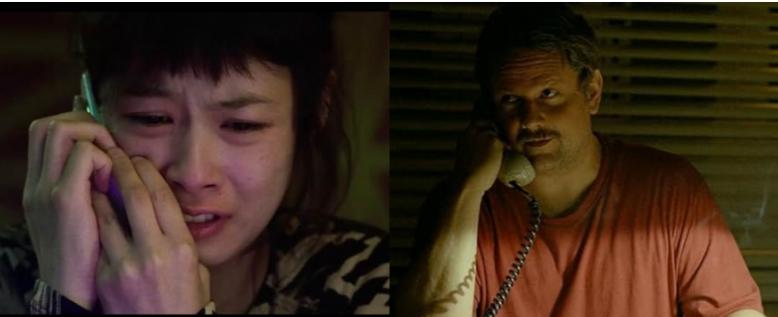
“아마 나는 아직은 어린가 봐 그런가 봐”
“Maybe I am still just young, I guess.”
— Lyric from Cho Yong-pil’s Red Dragonfly (고추잠자리), needle-dropped in No Other Choice
A detail which I have so far neglected in this piece is in what exactly the spirit of Brazilian and South Korean cinema are. That is, what are the broader theoretical trappings that differentiate them? I may say that Cinema Novo and its periods were about making popular, realist depictions that underline an approach of social reality, or that South Korean cinema of the “golden age” and “new wave” were about capturing an authentic “Korean identity”, but what exactly perhaps separates the two cinemas’ engagement with that social realist subject matter?
Dr. Mazza informed me that Brazilian cinema was not just cinema, it was built through the connection to other art forms. Most prevalent was music which serves as the “DNA of the films”, not just “soundtracks” (Mazza, 2025). Music served as more than score and included popular songs to speak on more than a textual or filmic level. This is what Nagib (2018) calls “intermedial devices”, defined as “the utilisation within film of artforms such as painting, theatre and music, appear to function as a “passage” to political and social reality”. One significant example that comes to mind for me would be tropicália as a musical movement headed by musicians like Caetano Veloso, who himself made a song actually titled “Tropicália” in 1968, being part of that same cultural reality as the third phase of Cinema Novo. In fact, Salles replicates this same intermedial practice in the historical setting of 1970-71 in I’m Still Here when he needle drops Tom Zé’s Jimmy, Renda-se on top of characters mentioning the names of artists like Veloso or even the Beatles who had just broken up that year. Concerning the more recent Recife-based (the capital of Pernambuco state) movement of low budget, initially called “garage”, films associated with Kleber Mendonça Filho, Dr. Mazza provided a case to me of the film Amarelo Manga (2002). He noted how the music of “Manguebit” (or “manguebeat”) was pioneered by artists like Chico Science, also Pernambuco-born, and became a key part of the slightly more grassroots background of these films (Mazza, 2025).
By some regards, The Secret Agent is this kind of love letter to Recife, Pernambuco and this type of manguebit movement. But the intermedial passage does not end there. As an auteur, Filho’s own intermedial practice shows to be one of looking at a given setting’s evolution or change throughout history and examining those sociocultural and political economic forces which led to such transformation. I will try not to spoil any specific part of The Secret Agent (Dr. Mazza had not yet seen it on the day of our conversation) but there is one particular scene involving the distribution of newspapers that referenced real life historical events but transcended pure realistic reconstruction and instead becomes campy silliness, almost fitting the era and therefore style of Cinema Novo’s tropicália phase. Such types of intermedial passages that also pay some level of homage or adaptation to Brazilian cinematic heritage are not sparse in The Secret Agent, nor I’m Still Here and Filho’s documentary Pictures of Ghosts for that matter, as these films of historical reflection and commentary.
For South Korea, intermediality perhaps holds less of a distinct or conscious mark on the cinematic philosophy of filmmakers. As a cinema which remains incredibly centralised among a handful of corporations that “had emulated the classical Hollywood model of a vertically integrated studio with interests in every stage of a film’s creation”, history’s fingerprints are marked differently. Perhaps they are dusted and found differently as well. It seems that South Korean cinema has developed a distinct approach to social commentary and genre. Most significant to consider on the side of social commentary is the legacy of anti-communist and nationalist rhetoric that occupied much of the twentieth century after the Korean war. For at least the mainstream or “commercial auteurs” like Kim Jee-won, Park and Bong, this forced a particular artistic language around social commentary and critique, as part of directorial vision, that evolved from the golden age scenarios and their clear, realist depictions (Paquet, 2010, p. 93). Instead, films moved towards tension and representative metaphors and symbols. The traditional family structure, for example, was questioned more in terms of its place in South Korean culture and society. A Tale of Two Sisters (장화, 홍련) (2003) presents a clear family drama in which there is not only generational conflict, but also psychological suffering as a conflict to tackle this issue. Meanwhile famous works of Bong like The Host and Parasite situated the family as an intergenerational unit bounded by more than blood and instead emotions, class and shared experiences (Cho and Lee, 2019, p. 60). These two films as well are clever references to real world political economic issues in South Korea, specifically the monster as a distorted long term outcome of the real life catalyst of the McFarland incident in 2000 and the house and urban geography as a setting-based metaphor for capitalism and class.
Among these films, as well as the famous 2003 masterpiece duo of Oldboy (올드보이) and Memories of Murder (살인의 추억) for example, directors also pursued visions of genre-bending or hybridity. The Host is as tense of a monster film as it is compelling a social satire on the South Korean and US governments. Memories of Murder is engaging as both a mysterious police procedural and character study to figure out as well as a historical commentary on a past oppressive society. Evidently the list can go on as there seems to not only be a sense of making one’s own “take”, if the term can be used, of sometimes foreign genres but also that such hybridity is as good for artistry as it is marketability, with “genre classification” further intervened with when South “Korean films are exhibited and consumed elsewhere” (Stringer, 2005). This aspect of approaches to genre should perhaps be left for future discussion as genre itself remains a widely discussed concept in film studies more broadly.
So in returning to this broad essence confined more specifically to New Korean Cinema of the late 90s and continuing into the twenty-first century, we can set our sights onto No Other Choice. The film itself builds on a central class-based conflict adapted from Donald E. Westlake’s novel The Ax and yet, through Park’s creative vision, builds onto the unique spirit of South Korean cinema through its genre bending beyond just horror or thriller and into, most explicitly, dark comedy. The social commentary as well is incredibly fitting for the times. With economies, or rather inequalities, seemingly getting no better, the environment suffering more and the risk of automation never ceasing, Park continues in a social commentary perhaps not directly and completely disillusioned about South Korea as a country. He more so decries those forces and groups which have cursed the national society the same way other filmmakers of this period have. For The Handmaiden (아가씨) (2016), one of Park’s previous features, it is a culture of dominating male chauvinism in the midst of imperialist occupation. For No Other Choice it is new company owners, including foreign executives, who begin layoffs in the interest of “profitability” and not people or planet. The maintained textual detail of the paper industry thus becomes even more apt in the face of mechanisation and digitalisation. It speaks to some sense of realness yet also allows for a literal writing down of peripheral themes like male egos and gender roles, intergenerational trauma as part of wartime legacy or human desperation.
Conclusion
So where does that leave us? For one I hope this piece has demonstrated the key goal of (re)contextualising the place of these two films within the wider cinematic heritage of their respective countries. As individual works they exist as continuances of these legacies, as referential to their predecessors and reconstructive or reflective of their societies as they are creative and innovative to cinema. The comparative history structure of this piece has also illuminated some key insights about the political impact of cinema and vice versa. Dynamics of post-war leftism leading to adventurous leaps in filmmaking and then such movement being suppressed by US-backed military dictatorships morphed both countries’ cinemas into continuous bastions of socially conscious filmmaking in spite of their different experiences with neoliberal policy. For Brazil, the relief only just barely reconstructed the cinema industry from its economic ruins, the spirit of economising productions and their budgets persisted. For South Korea, the relief was far more centralised and homogenous likely due to the political-structural particularities. A post-dictatorship world of chaebols following a period where low-budget independent projects were effectively outlawed made a much more commercial but nonetheless still artistically significant cinema. Certainly this revealed how different artistic approaches to filmmaking within the wider creative environment was significant. South Korea’s struggle for self-definition and continuous fight against dominance, imperial or capitalist, underlined a tradition of biting social commentary and genre hybridity. Brazil’s diverse populations’ united suffering under class inequality and militaristic imperial domination underlined a tradition of popular authenticity through the intermedial passages.
There remains so much more to be discussed at length here, and on so many more dimensions. For example, Cinema Novo took great influence from other pioneering post-war and establishment-skeptic film movements like 1920s Soviet cinema, Italian Neorealism and the Nouvelle Vague both in terms of the critic-to-director pipelines but also in how they went about their filmic theories and practice (Johnson and Stam, 1995, pp. 55–56). I would so greatly wish to talk more about Brazilian music, about tropicália, samba and bossa nova, or figures like Chico Buarque as much as I would like to stress the importance of actors like Song Kang-ho. What of the supposed parallels between the filmmaking “spirits” which I have classified here as distinct to each country appearing in the other? When Park needle-drops an older trot or K-pop song as if it were its own intermedial passage or Filho adds elements of mystery to heighten the historicity of his social analysis and commentary, what ends up being suggested? I also ask of even newer or younger filmmakers like Gabriel Mascaro (mentioned to me by Dr. Mazza) and how they will have their own time to shine.
I shall end by recalling two parts of my conversation with Dr. Mazza which I hope will first help frame the sheer size of this subject matter when roughly organised like this piece and second demonstrate that this evolution and struggle of cinema is everlasting. When I first asked what Cinema Novo was, Dr. Mazza was quick to tell me that this current era of Brazilian cinema, I’m Still Here, The Secret Agent and so on, was completely different to Cinema Novo and for that matter other periods. But most significant was at the end when he asked me where I was from. After I told him I was from Cambodia he followed up by asking me how the cinema was there, back home. The question was almost too familiar to me that I needed a moment to just briefly give him a condensed version. That the current era is seeing some promise from more independent filmmakers but, most importantly, that it was thriving with such a richness and yet war, dictatorship and, most unfortunately, genocide put such a destructive end to it all. Whatever reels were not broken up or burned would sit to die out with no proper maintenance.
Similar stories stick for other places. The restoration and preservation of (South) Korean cinema has notably been difficult for those made in the war stricken decades. Dr. Mazza would probably corroborate the idea that the dictatorship’s disregard for some films, and the underfunded dead age, saw limited preservation as well. But perhaps most significant was that the fascist and authoritarian periods seem to share this quality of disregard as there was a notable fire and loss of archives under the Bolsonaro presidency. But now in the face of a new presidency in Brazil, and the recent news as of writing of Yoon Suk-yeol’s life imprisonment sentence, it brings hope to me that these two countries will be able to still hold onto their great cinematic heritages and further the artform. Cambodia certainly could take some notes. But if anything is to have been effectively boiled down in this piece, it shall be that the quest towards self-identity is difficult, harder still under the oppressive weight of global capitalism and a national cinema that could benefit from some more support. But just like the first phase filmmakers of Cinema Novo and the South Korean golden age, I remain greatly optimistic that something shall come too. For now though, I shall also sit back and enjoy more from these two cinematic titans.
—
References
Cho, J. and Lee, S. (2019) ‘A Brief History of Korean Cinema,’ in Rediscovering Korean Cinema. University of Michigan Press, pp. 34–64.
Johnson, R. and Stam, R. (eds) (1995) Brazilian cinema. Columbia University Press.
Mazza, F. (2025). Teams conversation with Dr. Francisco Mazza, 17 February.
Personal communication
Nagib, L. (2018) ‘Passagens,’ Rumores, 12(24), pp. 19–40. https://doi.org/10.11606/issn.1982-677x.rum.2018.148836.
Paiva, S. (2013) ‘Paths of Brazilian Road Movies in the 1950s,’ in The Brazilian Road Movie: Journeys of (Self) Discovery. 1st edn. University of Wales Press, pp. 26–48. https://www.jstor.org/stable/j.ctt9qhhc7.9.
Paquet, D. (2010) New Korean cinema: Breaking the Waves. Columbia University Press.
Rocha, G. (1995) ‘An Esthetic of Hunger,’ in R. Johnson and R. Stam (eds) Brazilian Cinema. 2nd edn. Columbia University Press, pp. 68–71.
Stringer, J. (2005) ‘Putting Korean Cinema in its Place: Genre Classifications and the Contexts of Reception,’ in J. Stringer and C.-Y. Shin (eds) New Korean Cinema. Edinburgh University Press, pp. 95–105.
UNESCO (2025) On World Cities Day 2025, the UNESCO Creative Cities Network welcomes 58 new member cities. https://www.unesco.org/en/articles/world-cities-day-2025-unesco-creative-cities-network-welcomes-58-new-member-cities (Accessed: February 20, 2026).